Indian banks pretend they don't give credit cards to college students. The application forms ask for "occupation" and "monthly income" as if every applicant has a salaried job — and most students click away. The reality: five Indian banks have built dedicated student credit-card paths in 2026, and three of them require zero income proof. If you're 18-22, in college, and want to build your CIBIL score before you start your career, here's exactly how each works.
Why getting a credit card in college is the highest-ROI financial move you can make
CIBIL scores are time-weighted. A 22-year-old with a 750 CIBIL score (from a 4-year-old credit card) qualifies for a home loan at 8.5%. A 30-year-old with the same 750 score from a 1-year-old card qualifies for the same home loan at 9.5% — banks penalize "thin file" credit history. The difference on a ₹50 lakh home loan over 20 years: ₹6.5 lakh in extra interest.
This is why every Indian student should get a credit card by age 19-20 — even if they don't actively need it. Use it for one small monthly spend (a Netflix subscription, a college mess fee), pay it 100% on time, let the credit history age in the background. By the time you need a car or home loan at 28, your credit profile is decade-old and premium-grade.
5 credit cards for Indian college students (2026)

Kotak 811 #DreamDifferent Credit Card
annual fee
joining fee
reward rate
min income
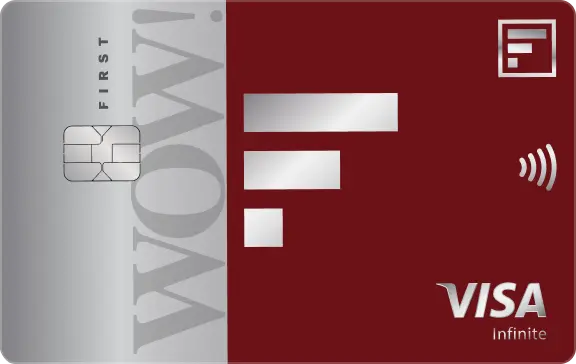
IDFC FIRST Wow Credit Card
annual fee
joining fee
reward rate
min income
⚠ Product card shortcode references missing slug: federal-scapia. Check spelling against credit_cards table.
| Card | Min requirement | Joining fee | Annual fee | Best for |
|---|---|---|---|---|
| Kotak 811 #DreamDifferent | Kotak 811 savings + student ID | ₹0 | ₹500 (waived ₹50K spend) | Fintech-native Gen Z |
| Federal Scapia (prepaid) | PAN + Aadhaar | ₹0 | ₹0 lifetime | International subscriptions + travel |
| IDFC FIRST Wow! (FD-backed) | ₹10,000 FD | ₹0 | ₹0 lifetime | CIBIL building from scratch |
| SBI Student Plus Advantage | Tie-up college enrollment | ₹0 | ₹0 | IIT/IIM/NIT students |
| Add-on under parent's card | Parent has primary CC | ₹0 | ₹0 (covered by primary) | Instant card, parent guarantee |
Kotak 811 #DreamDifferent — the modern student default
Kotak Mahindra Bank launched 811 specifically for Gen Z digital natives — and the #DreamDifferent credit card targets students with this same DNA. Eligibility: a Kotak 811 savings account (zero balance, fully digital opening via Aadhaar OTP) + a valid student ID. The bank's underwriting accepts internship stipends, family bank transfers, or even just "student" as occupation.
Credit limit: typically ₹15,000-50,000 for new applicants, scaling to ₹1-2 lakh as you graduate to internships and your bank account shows higher inflows. Rewards: 2x reward points on online spends (Swiggy, Zomato, Netflix, Spotify — categories students actually use). 4 reward points per ₹150 on dining + entertainment.
The ₹500 annual fee is waived if you spend ₹50,000+ in any 12-month period. For most college students, that's just 6-9 months of normal subscription + food-delivery spending.
Federal Scapia — zero forex for international student spending
Federal Scapia is a prepaid Visa card (issued via Federal Bank, designed by the Scapia team — a fintech). You load money via UPI / IMPS / netbanking, then spend like a debit card globally. Zero income proof, same-day virtual card, free physical card.
Why students love it: zero forex markup on international transactions. Subscribing to ChatGPT Plus, Spotify Premium (cheaper if you switch your region), Amazon US for textbooks, Udemy courses billed in USD — all run on Scapia at the spot exchange rate. Compare to a regular Indian credit card's 3.5% forex markup on the same transactions.
The catch: it's a prepaid card, not a credit card. It doesn't build CIBIL. So pair it with one of the other four options — Scapia for international, the CIBIL-building card for everything else.
IDFC FIRST Wow! — the CIBIL-builder for serious students
If you (or your parents) have ₹10,000 you can park in a fixed deposit, IDFC FIRST Wow! is the most powerful student credit-card option:
- Credit limit = 100% of FD value (₹10,000 FD = ₹10,000 credit limit)
- ₹0 joining fee, ₹0 annual fee — lifetime free
- FD earns IDFC FIRST's FD rate (~7-7.5% currently) — you don't lose the money
- Build CIBIL fully and independently — same as any unsecured credit card on credit reports
- 1 reward point per ₹150 spend, redeemable for cashback at 25 paise/point
The standard student setup: ₹10,000 FD from parents (treated as a graduation gift / education fund advance), IDFC Wow! credit card in your name. Use it for ₹2,000-3,000 of monthly subscriptions (Netflix, Spotify, Apple Music, ChatGPT Plus), pay 100% on due date every month. After 12 months, your CIBIL score is 720-750. After 24 months: 770+. By the time you graduate and start your job, you have a ₹50,000+ credit limit pre-approved on multiple cards.
SBI Student Plus Advantage — for top-college students with bank tie-ups
SBI has tie-ups with most IITs, IIMs, NITs, AIIMS, top medical/dental colleges, and several large engineering/management institutes for the Student Plus Advantage card. If your college is on the tie-up list, you're eligible without any income proof — just proof of enrollment.
Credit limit: ₹15,000-50,000 (sometimes up to ₹1 lakh for IIM/IIT seniors). Reward rate: 1% cashback equivalent on all spends, redeemable into your SBI account. Annual fee: ₹0 (lifetime free for SBI tie-up students).
To check tie-up: ask your college admin office, or call SBI Cards customer care (1860-180-1290) with your college name. Application takes 10-15 days, requires your college ID + admission letter + Aadhaar.
Add-on card under a parent's primary
If your parent has any major bank credit card (HDFC, SBI, ICICI, Axis, Kotak), they can add you as a supplementary card-holder. This is free, instant (7-10 days for the card to arrive), and gives you a working credit card in your purse with your name on it.
Catch: the credit limit is shared with the primary card. If your parent's HDFC Millennia has ₹2 lakh limit, both cards draw from the same ₹2 lakh pool. CIBIL impact: the add-on shows on your CIBIL report partially — your spend and repayment count, but the credit-history-length is inherited from the primary, not from your application date.
The right play: add-on for immediate spending + IDFC Wow! for independent CIBIL building. Two cards, one in your name fully, one shared with parents.
What should a student actually spend on a credit card?
The trap most first-time student card holders fall into: treating the credit card like extra income. It's not — it's a 50-day-interest-free spending tool that must be paid in full every month. Here's the right discipline:
| Spend | Why on credit card |
|---|---|
| Monthly subscriptions (Netflix, Spotify, Apple Music) | Auto-recur, easy to track, build CIBIL with predictable spend |
| College mess / hostel fees (where accepted) | Large enough to register on CIBIL, predictable monthly |
| Online textbook purchases (Amazon, Flipkart) | Earn 2x rewards on most student cards |
| Internship-related travel (Ola, Uber, IRCTC) | Travel-category bonus rewards on most cards |
| Restaurant outings on weekend (small) | Dining is a 2-4x reward category — small ticket builds CIBIL |
What NOT to do: don't take cash advances (highest-APR feature, 3-4% per transaction + 36% APR on the cash drawn). Don't max out the card (keeps utilization below 30%). Don't pay just the "minimum due" (that triggers 36-42% APR on the remaining balance). Don't ignore the bill (a single missed payment drops your CIBIL by 50-80 points and stays on your report for 3 years).
Step-by-step: getting your first credit card as a college student
- Get your PAN card if you don't have one. Apply at the NSDL website, takes 10-15 days. Cost: ₹107. This is the most important prerequisite.
- Open a Kotak 811 savings account via the Kotak 811 mobile app. Use Aadhaar OTP. Takes 10 minutes.
- Apply for IDFC FIRST Wow! against a ₹10,000 FD via the IDFC FIRST mobile app. Approval in 24-48 hours.
- While that's processing, get a Federal Scapia prepaid card from the Scapia app — for any international transactions you need in the meantime.
- Activate the IDFC Wow! when it arrives. Set up auto-pay from your Kotak 811 savings account (or the same IDFC savings account you may already have).
- Use the IDFC Wow! for one or two small predictable monthly spends (Netflix at ₹199, Spotify at ₹119, ChatGPT Plus at ₹1,650 via Federal Scapia in parallel).
- Pay the bill 100% on time every single month, no exceptions, for 12 months. Your CIBIL will go from no-score to 720-750.
This is the standard "build credit before you start your career" playbook used by financially aware Indian students in 2026. The cost: ₹10,000 of capital locked in an FD that's still earning 7-7.5%. The return: a ₹6-7 lakh interest savings on your future home loan.
What students should avoid
- "Bajaj Finserv EMI Card" kiosks at college: these are NOT credit cards. They're store-credit instruments for purchasing electronics on EMI. They don't build CIBIL the way a true credit card does.
- "Slice / Uni / OneCard student plans" (the BNPL/Pay-Later category): regulatory scrutiny ongoing since RBI's November 2022 PPI ruling. Many are functionally not credit cards. They may show on CIBIL but the credit-building value is uncertain. Stick to traditional banks for first card.
- "Get a credit card on Aadhaar only" ads on Instagram: these are usually phishing scams to harvest personal data. All legitimate Indian credit cards require PAN + Aadhaar + a bank account at minimum.
- Multiple simultaneous credit-card applications: applying for 3 cards in the same week tanks your CIBIL by 10-20 points and signals "credit-hungry" to the bureau. Apply for one, wait, then another if rejected.
Want to compare more cards? See our full credit-card listing. For students who want zero-forex international payments, our zero-forex card guide goes deeper on Scapia, Niyo, IndusInd Tiger and friends.
Sources: RBI Master Direction — Credit Card and Debit Card – Issuance and Conduct Directions 2022 (updated November 2024); IDFC FIRST Bank Wow! product disclosure; Kotak Mahindra Bank 811 + #DreamDifferent product page; CIBIL Credit Information Bureau methodology document v3.2 (TransUnion CIBIL).
Frequently Asked Questions
Can I get a credit card as a college student in India?
Yes, through five legitimate routes: (1) Kotak 811 #DreamDifferent linked to a student savings account, (2) Federal Scapia prepaid card (zero forex, no income proof), (3) IDFC FIRST Wow! against a ₹10,000 FD funded by parents, (4) SBI Student Plus Advantage for engineering/medical college students with bank tie-ups, (5) Add-on card under a parent's primary card. The first four are in your own name and build your CIBIL score independently.
What's the minimum age for a credit card in India?
18 years for most banks (legal age of majority). However, banks impose practical thresholds: Kotak 811 accepts 18+ with student ID. SBI Student Plus Advantage requires 18+ enrollment at a tie-up college (IITs, IIMs, NIITs, top med schools). IDFC FIRST Wow! has no upper or lower age limit but requires PAN card (which you can get at 18). For minors (under 18), only add-on cards under parents are available — no primary credit card.
Will a student credit card hurt my CIBIL if I'm new?
No — a student credit card is exactly how new-to-credit applicants build a CIBIL score from scratch. CIBIL gives you a 'no-score' status (not zero) for the first 6 months. After 6 months of one credit card with on-time payments, you'll have a score in the 700-740 range. After 12 months, 750+. Keep credit utilization below 30% (e.g., on a ₹20,000 limit, spend max ₹6,000/month) and pay 100% of the bill by due date — this is the fastest CIBIL-building path.
Do I need a job or income to get a student credit card?
No — three of the five options require zero income: (1) Federal Scapia is a prepaid card, no income check at all, (2) IDFC FIRST Wow! is FD-backed, the ₹10,000 FD substitutes for income proof, (3) An add-on under a parent's card has no separate income check. Kotak 811 #DreamDifferent asks for a student ID + your linked Kotak 811 savings account (you can open it with ₹0 minimum balance). SBI Student Plus Advantage needs proof of enrollment at a tie-up college, no salary slip.
What's the best credit card for college students in India?
For zero-friction setup: Federal Scapia (prepaid, same-day, zero forex — works for ChatGPT Plus, Spotify, Amazon US shopping). For CIBIL building: IDFC FIRST Wow! against ₹10,000 FD (full ₹10K credit limit, zero fees ever, your CIBIL builds in 12 months). For premium-college students: SBI Student Plus Advantage (₹15-50,000 limit at top colleges, 1% reward on most spends). Most-used by Gen Z: Kotak 811 #DreamDifferent (linked to fintech-friendly 811 savings).
Should I get a credit card or stick with UPI/debit?
UPI + debit cover daily needs (PhonePe, Swiggy, metro). A credit card adds three things UPI can't: (1) builds your CIBIL score, which you'll need for car/home loan in your late 20s, (2) gives you 50-day interest-free credit on purchases (e.g., emergency laptop repair on credit card, pay over next billing cycle from your stipend/internship income), (3) international transactions where UPI doesn't work (Amazon US, Apple subscriptions, Udemy courses). Get a no-fee credit card alongside UPI — they complement each other.
EMI Calculator
Calculate your credit card EMI conversion
- Convert large purchases into easy EMIs
- Compare tenure options (3, 6, 9, 12 months)
- See total interest you'll pay upfront