Indian banks have quietly opened seven paths for homemakers to own a credit card in their own name — no salary slip required. The conventional advice ("just get an add-on under your husband's card") is the easiest route but it's not the only one, and it's not the best one if you want to build your own CIBIL score independently. Here's how each of the seven routes actually works in 2026, with real banks, real limits, and the eligibility quirks that matter.
The seven legitimate routes — at a glance
Before going deep on each, here's the decision matrix:
| Route | Setup time | Builds your CIBIL? | Real Indian limit | Best when |
|---|---|---|---|---|
| 1. Add-on under spouse's card | 7-10 days | Partly | Same as primary | You want one fast |
| 2. FD-backed credit card | 5-7 days post-FD | Yes (full) | 80-85% of FD | You want independent credit history |
| 3. Joint-account credit card | 10-14 days | Yes (full) | Bank-decided | Joint savings already exists |
| 4. Co-applicant on spouse's card | Rare in India | Yes (full) | Same as primary | Bank explicitly offers (HDFC + select foreign banks) |
| 5. Federal Scapia prepaid (loaded) | Same day | No | Load-and-spend | Need international payments only |
| 6. Niyo Global Yes Bank debit | Same day | No | Linked to savings | Zero forex for travel/Amazon US |
| 7. Cred RentPay / NoBroker spouse-card | Within 24 hr | Via primary's CIBIL | Primary's limit | You manage household rent/utility spends |
Route 1: Add-on card under your spouse's primary
This is the path 80% of Indian housewives take, and for good reason: it's free, the eligibility is just "be a relative of the primary card-holder", and the application takes 7-10 days. SBI Cards, HDFC, ICICI, Axis and Kotak all offer add-ons free of cost — there's no separate joining fee or annual fee on the supplementary card.
The add-on inherits the credit limit of the primary card. If your husband has an HDFC Millennia with a ₹2 lakh limit, the add-on card you get shares the same ₹2 lakh — meaning if either of you swipes ₹1.5 lakh, the other has only ₹50,000 left for the month.
The critical thing CIBIL-wise: the add-on shows up on your CIBIL report under your PAN, and your spends + repayments are reflected. But the "credit history length" — how long this account has been open — is the primary holder's age, not yours. So if your husband opened his card in 2015 and you got the add-on in 2026, CIBIL credits you with the 2015 opening date for that account.
For most homemakers, this is enough. You get a working credit card in your purse, you can pay independently from your spouse's salary account, and CIBIL slowly builds. The drawback is when you eventually try to apply for a primary card in your name, the bank sees you have credit history but tied to someone else's income — they may decline.
Route 2: Credit card against a fixed deposit
This is the route Indian banks actively want homemakers to take, but most don't advertise it loudly. Here's how it works: you open an FD of ₹15,000-50,000 at the bank, mark it as lien (the bank holds claim on it but you still earn interest), and the bank issues you a credit card with a limit of 80-85% of the FD value.
Real Indian programs as of 2026:
| Bank + Card | Minimum FD | Credit limit | Joining fee | FD interest |
|---|---|---|---|---|
| SBI Card Advantage Plus | ₹15,000 | 85% of FD | ₹0 | SBI FD rate (6.5-7.5%) |
| ICICI Bank Coral (against FD) | ₹20,000 | 85% of FD | ₹500 + GST | ICICI FD rate (6.5-7.25%) |
| Axis Bank Insta Easy | ₹20,000 | 80% of FD | ₹0 | Axis FD rate (6.7-7.25%) |
| Kotak Aqua Gold | ₹15,000 | 90% of FD | ₹0 first year | Kotak FD rate (6.5-7.4%) |
| HDFC Bank (limited program) | Discretionary | Branch-decided | Varies | HDFC FD rate |
The math: a ₹20,000 FD at ICICI earns roughly ₹1,400/year in interest, while you get a ₹17,000 credit card limit. Your FD doesn't break — it's just marked as collateral. If you default on the card, the bank has the legal right to break the FD and recover dues. If you pay on time (every month), the FD continues earning interest like normal until you close the card.
This is the fastest legitimate way to build your own CIBIL score. The credit card account is opened in your name, on your PAN, with your KYC. CIBIL treats it like any other credit card — six months of on-time payments typically lifts your CIBIL from no-score to 700+.
Route 3: Joint-account credit card
If you and your spouse hold a joint savings account, some banks allow you to apply for a credit card with both names on the application. SBI, Bank of Baroda, and PNB process these as "primary + joint" applications, and the joint applicant gets independent CIBIL impact.
The catch: most private banks (HDFC, ICICI, Axis) don't offer true joint credit cards — they only offer add-ons. The joint card is more common in PSU banks and cooperative banks. If you have a Bank of Baroda joint account with your spouse, ask the branch about their "joint credit card" product — it's usually a Bank of Baroda Easy or Premium Card.
Route 4: Co-applicant on spouse's primary card
This is rare in India. HDFC Bank's Infinia Metal Edition and a few foreign-bank cards (Standard Chartered Ultimate, formerly American Express Platinum Charge) explicitly allow a co-applicant arrangement where both holders share full liability and both build CIBIL independently.
For most homemakers, this is the highest-CIBIL-boost option, but the cards in question all need ₹50 lakh+ household income, ₹10K-12K joining fees, and a wealth-banking relationship. Not practical for the typical use case.
Routes 5 + 6: Federal Scapia and Niyo Global (technically not credit cards)
These are prepaid Visa cards, not credit cards. You load money via UPI or bank transfer, and you can spend it like a debit card — including at international merchants, online subscriptions, and at any merchant globally.
Why they matter for homemakers:
- Federal Scapia (issued by Federal Bank): zero forex markup on international transactions, free virtual card for online use, free physical card. Useful when your spouse's primary card has 3.5% forex markup but you want to subscribe to ChatGPT Plus or shop on Amazon US.
- Niyo Global (Yes Bank/SBM Bank backed): 0% forex markup on point-of-sale international transactions, free debit card. Useful for international travel where you need ATM withdrawal in foreign currency.
Neither builds CIBIL, neither shows up on a credit report. But for a homemaker who only needs a card that works abroad and online, these solve the problem without any income verification — KYC is just PAN + Aadhaar.
Route 7: Cred RentPay or NoBroker via spouse's card
If your spouse already has a credit card and you handle household rent / school fees / society maintenance, you can use Cred RentPay or NoBroker Pay to put those payments on your spouse's credit card. The card-holder is technically your spouse, but the payment confirmation goes to you, and you can manage the household financial calendar.
This isn't strictly a "credit card for housewife" but it's the workflow many Indian homemakers actually use — manage household payments via spouse's CC, get the reward points/cashback into the spouse's account, then track the family budget in a single dashboard. CRED's monthly summary and NoBroker's rent ledger are both designed for this.
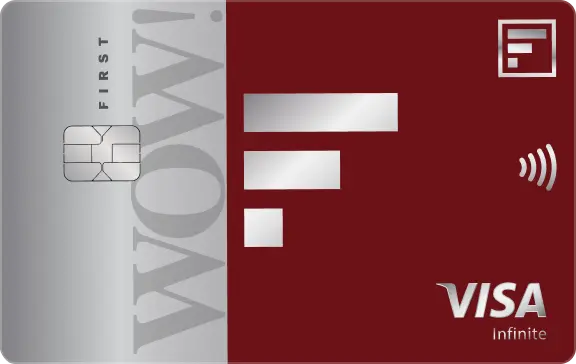
IDFC FIRST Wow Credit Card
annual fee
joining fee
reward rate
min income

Kotak 811 #DreamDifferent Credit Card
annual fee
joining fee
reward rate
min income
If your real goal is CIBIL building, here's the ranked path
- Open an FD of ₹20,000-30,000 at any major bank. Apply for an FD-backed credit card same day. Within 2 weeks, you'll have a credit card in your name building independent CIBIL.
- Spend 30-40% of the limit monthly (e.g., on ₹17,000 limit, spend ₹5,000-7,000). Don't max out — credit utilization is 30% of your CIBIL weight.
- Pay 100% of the bill before the due date. Set up auto-pay from your savings account or a UPI auto-pay.
- After 6 months, your CIBIL score will likely be 700-740. After 12 months: 750+.
- After 12-18 months, apply for an unsecured credit card. With a 750+ CIBIL score, even without a salary slip, you'll likely get approved for entry-level cards like HDFC Millennia or Axis ACE — banks now have explicit "self-employed / homemaker" application paths.
What to avoid
Three things every Indian homemaker should reject when approached:
- "Loan against gold + credit card combo" (Muthoot, Manappuram pitches): you pay 11-14% interest on the gold loan AND get a small CC limit. The gold loan economics rarely make sense if you just want a credit card.
- "Pay ₹2,000 joining fee for instant credit card" from unbranded agents at malls: these are often co-branded with NBFCs, have hidden high APRs, and the "instant" promise rarely materializes.
- "Just take a personal loan, then we'll give you a credit card": never take an unsecured loan as a credit-card precondition. The interest on the loan (14-22%) will exceed any benefit from the card.
Final recommendation
For most Indian homemakers in 2026: start with an FD-backed credit card from ICICI Coral or SBI Advantage Plus (₹20,000 FD outlay, ₹17,000 credit limit, your CIBIL builds in 6-12 months) plus an add-on card under your spouse's primary HDFC or SBI card for instant spending power. After 18 months of clean payments on the FD card, apply for an unsecured card and the FD-backed one can be closed.
For homemakers whose only credit-card need is international payments (subscriptions, Amazon US, foreign travel): skip credit cards entirely and use Federal Scapia or Niyo Global — zero income proof, same-day issuance, no fees.
Need help comparing FD-backed credit cards? Use our full credit-card comparison or our CC payoff calculator to see how monthly payment patterns affect your credit-utilization ratio.
Sources: RBI Master Direction — Credit Card and Debit Card – Issuance and Conduct Directions 2022, updated 2024; SBI Cards Annual Report 2024-25; ICICI Bank credit-card product disclosures; HDFC Bank credit-card application guidelines; CIBIL Credit Information Bureau methodology document v3.2.
Frequently Asked Questions
Can a housewife get a credit card in India without a salary?
Yes. Indian banks accept three alternatives: (1) an add-on card linked to a spouse's primary card (free, instant), (2) a credit card against a fixed deposit (₹10,000 FD = ₹8,500 credit limit), or (3) a secured prepaid card from Federal Scapia or Niyo Global. SBI, ICICI, HDFC, Axis and Kotak all run FD-backed credit-card programs explicitly for non-earning applicants.
Does an add-on credit card build my own CIBIL score?
Partly — but not as much as a primary card. CIBIL tracks the add-on under your PAN, so on-time spends do show up on your report. But the credit limit and account-opening date are inherited from the primary card-holder, so the 'credit history length' metric (15% of CIBIL weight) is attributed to them, not you. For independent CIBIL building, an FD-backed credit card or a secured prepaid card is faster.
What's the minimum FD amount for a credit card?
₹10,000-15,000 with most Indian banks. SBI offers SBI Card Advantage Plus against an FD of ₹15,000+. ICICI offers a Coral card against any FD of ₹20,000. Kotak Aqua Gold needs ₹15,000. The credit limit is typically 80-85% of the FD value. Your FD continues to earn interest — it's only marked as lien, not broken.
Will Federal Scapia or Niyo Global show up as a credit card on CIBIL?
No — both are prepaid Visa/RuPay cards, not credit cards. They don't help build CIBIL score and don't appear on your credit report. They give you international payment access (zero forex markup on Scapia, 0% on Niyo Global Yes Bank) for international shopping, subscriptions, and travel, but for credit-history building, you need a true credit-card product like the FD-backed routes.
Can I get a credit card on my husband's income alone?
Some banks accept a joint application with spouse-as-co-applicant for personal loans, but credit cards remain individually underwritten. The cleanest 'spouse income' route is an add-on card. SBI, HDFC and ICICI offer free add-on cards with the same credit limit as the primary card — typically issued in 7-10 days, no income check on the add-on holder.
Which is the best credit card for housewives in India?
For independent CIBIL building: an FD-backed card (ICICI Coral against ₹20K FD, or SBI Advantage Plus against ₹15K FD). For zero-friction first card: an add-on under spouse's HDFC Millennia or SBI Cashback. For international transactions with no credit check: Federal Scapia prepaid (zero forex, IndusInd Bank-issued).
EMI Calculator
Calculate your credit card EMI conversion
- Convert large purchases into easy EMIs
- Compare tenure options (3, 6, 9, 12 months)
- See total interest you'll pay upfront