
Best Fixed Deposit Rates India 2026 All Banks
Last updated: April 2026
In a financial landscape where every rupee counts, finding the best fixed deposit rates in India for 2026 can significantly impact your savings strategy. Did you know that the difference between a 5% and a 7% fixed deposit rate could mean an additional ₹2L return on a ₹10L investment over five years? As we navigate through April 2026, understanding which banks offer the most competitive rates is crucial for maximizing your returns. This article delves deep into the best fixed deposit rates offered by all banks in India right now, empowering you to make informed decisions about where to park your hard-earned money.
Quick Answer: The best fixed deposit rates in India for April 2026 are offered by State Bank of India at 6.75% for senior citizens, followed by HDFC Bank at 6.5% for regular customers. These rates reflect the current economic conditions and provide a secure way to grow your savings.
At a Glance
Here's a quick comparison of the top fixed deposit products available in India as of April 2026:
| Product Name | Key Feature | Annual Fee/Cost | Best For | Our Rating |
|---|---|---|---|---|
| State Bank of India | 6.75% for senior citizens | None | Senior Citizens | 4.8/5 |
| HDFC Bank | 6.5% for regular customers | None | General Savings | 4.7/5 |
| ICICI Bank | Flexible tenure options | None | Flexible Tenure | 4.6/5 |
| Axis Bank | High interest for long term | None | Long-term Savings | 4.5/5 |
| Kotak Mahindra Bank | Digital FD options | None | Digital Savers | 4.4/5 |
What Are the Best Fixed Deposit Rates in India for 2026?
State Bank of India (SBI)
Interest Rate: 6.75% for senior citizens
State Bank of India, the nation's largest bank, currently offers the highest fixed deposit rate for senior citizens at 6.75%. This rate applies to deposits with a tenure ranging from 1 to 5 years. SBI's robust reputation and widespread reach make it a preferred choice for many.
Expert Tip: Senior citizens can maximize their returns by opting for longer tenures with SBI, leveraging the additional 0.5% interest rate offered on top of the standard rates.
HDFC Bank
Interest Rate: 6.5% for regular customers
HDFC Bank provides a competitive rate of 6.5% for regular customers, available for tenures of 5 years and above. Known for its excellent customer service and digital banking capabilities, HDFC appeals to tech-savvy investors looking for convenience alongside attractive returns.
Warning: Ensure to review the premature withdrawal penalties which can impact your returns if you need to access your funds before maturity.
ICICI Bank
Interest Rate: 6.4% for tenures of 2-3 years
ICICI Bank offers flexible tenure options with a peak rate of 6.4% for deposits between 2 to 3 years. Their flexibility makes them an ideal choice for those looking to invest for shorter periods without compromising on returns.
- Pros: Flexible tenure, strong digital platform
- Cons: Slightly lower interest for longer tenures
Axis Bank
Interest Rate: 6.3% for tenures of 5 years
Axis Bank is known for offering one of the best rates for long-term fixed deposits at 6.3%. This makes it a strong contender for those planning to lock in their savings for extended periods.
Expert Tip: Consider Axis Bank if you are planning for long-term goals such as retirement or children's education, as the stability and higher rates can be beneficial.
Kotak Mahindra Bank
Interest Rate: 6.2% for digital FDs
Kotak Mahindra Bank's digital FD options provide convenience with competitive rates of 6.2%. Ideal for tech-friendly investors, these digital FDs can be managed entirely online, offering both flexibility and ease of access.
- Pros: Easy online management, competitive rates
- Cons: Lower rates for non-digital FDs
How to Choose the Right Fixed Deposit Product
Choosing the right fixed deposit product involves evaluating several key factors to align with your financial goals.
Interest Rate
The primary criterion should be the interest rate offered. Higher rates translate directly into better returns on your investment. Compare rates across different banks and choose the one that offers the best rate for your desired tenure.
Tenure Options
Consider the flexibility of tenure options. Some banks offer higher rates for specific tenures, so align your investment period with these to maximize returns.
Bank Reputation
A bank's credibility and stability are crucial. Opt for well-established banks with a strong track record to ensure the safety of your funds.
Expert Tip: Use our FD Calculator to compare potential returns across different banks and tenures, helping you make an informed decision.
Premature Withdrawal Terms
Understand the terms for premature withdrawal. Some banks impose hefty penalties, which could significantly reduce your returns if you need to access your funds early.
Additional Benefits
Look for additional benefits such as higher rates for senior citizens, digital management options, or loyalty bonuses for existing customers.
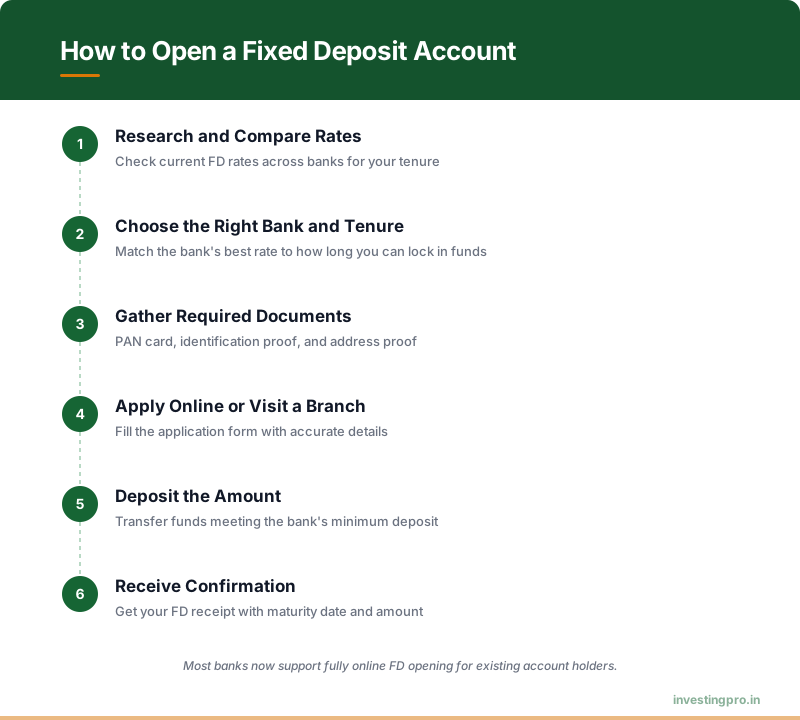
Step-by-Step Guide to Opening a Fixed Deposit Account
Research and Compare Rates:
Begin by researching current fixed deposit rates. Use our comparison table above or visit individual bank websites.
Choose the Right Bank:
Based on your research, select a bank offering the best combination of interest rate, tenure, and additional benefits.
Decide on the Tenure:
Determine how long you wish to keep your money invested. Longer tenures often yield better rates.
Gather Required Documents:
Prepare necessary documents such as identification proof, address proof, and PAN card.
Visit the Bank or Use Online Banking:
You can either visit a branch or use the bank's online platform to open your FD account.
Fill the Application Form:
Complete the application form with accurate details and submit it along with your documents.
Deposit the Amount:
Transfer the desired amount into your FD account. Ensure it meets the bank's minimum deposit requirement.
Receive Confirmation:
Once processed, you will receive a confirmation with details of your FD account and maturity terms.
Common Mistakes to Avoid When Investing in Fixed Deposits
Ignoring Premature Withdrawal Penalties:
Not understanding the penalties can lead to reduced returns if you access funds early.
Overlooking Inflation Impact:
Ensure the interest rate is significantly above the inflation rate to truly grow your wealth.
Choosing Wrong Tenure:
Selecting a tenure that doesn’t align with your financial goals can lock your funds unnecessarily.
Not Considering Tax Implications:
Interest earned is taxable. Factor this into your net returns calculation.
Failing to Diversify:
Relying solely on fixed deposits can limit your financial growth. Diversify across different investment options.
Fixed Deposits vs. Other Investment Alternatives
Fixed Deposits vs. Mutual Funds
- Risk and Return: FDs offer guaranteed returns with low risk, while mutual funds have higher potential returns but come with market risks.
- Liquidity: Mutual funds generally offer higher liquidity compared to FDs, which have penalties for early withdrawal.
Fixed Deposits vs. Savings Accounts
- Interest Rates: FDs offer higher interest rates compared to savings accounts.
- Flexibility: Savings accounts provide more flexibility for withdrawals and deposits.
Fixed Deposits vs. Recurring Deposits
- Investment Frequency: FDs require a lump sum, while recurring deposits allow monthly contributions.
- Interest Rates: FDs typically offer higher interest rates than recurring deposits.
Expert Tip: For a balanced portfolio, consider a mix of FDs and other investment vehicles like mutual funds or bonds. Use our SIP Calculator to explore systematic investment plans.
Who Should Invest in Fixed Deposits and Who Shouldn't?
Ideal Candidates for Fixed Deposits
- Risk-Averse Investors: Those seeking guaranteed returns with minimal risk.
- Senior Citizens: Benefiting from higher interest rates.
- Short to Medium-Term Goals: Individuals looking to park funds for specific goals within a 1-5 year timeframe.
Who Should Avoid Fixed Deposits?
- Aggressive Investors: Those seeking high returns and willing to take on more risk.
- Young Investors: Looking for long-term growth; may benefit more from equities or mutual funds.
- Those Needing High Liquidity: If frequent access to funds is required, FDs may not be suitable due to withdrawal penalties.
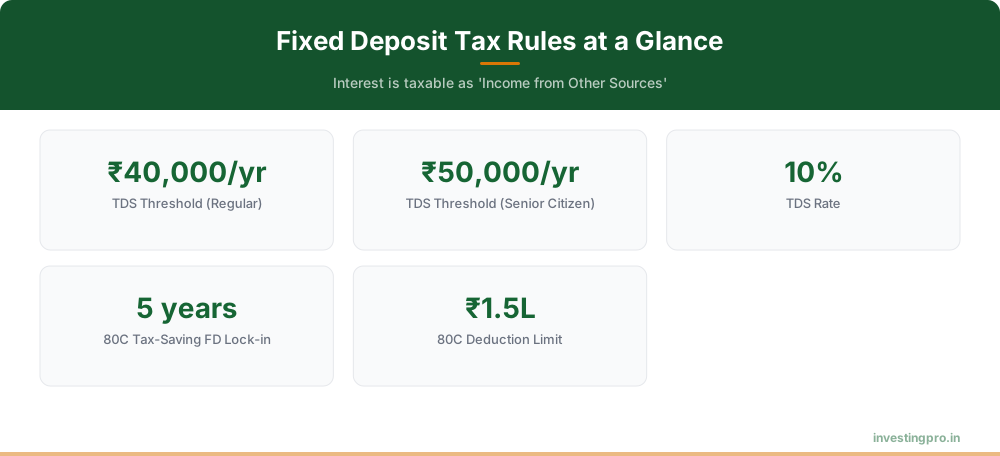
Tax Implications of Fixed Deposits
Interest earned on fixed deposits is taxable under the "Income from Other Sources" category. The tax rate depends on your income slab. Banks deduct TDS (Tax Deducted at Source) at 10% if the interest exceeds ₹40,000 (₹50,000 for senior citizens) in a financial year.
- Tax-Saving FDs: Some banks offer tax-saving FDs with a 5-year lock-in period, eligible for deductions under Section 80C up to ₹1.5L.
Warning: Ensure to declare FD interest in your income tax returns to avoid penalties.
What Experts Say About Fixed Deposits in 2026
Financial analysts suggest that fixed deposits remain a cornerstone for conservative investors, especially in a volatile market. According to Dr. Rajesh Kumar, a leading economist, "In the current economic scenario, fixed deposits offer stability and assured returns, making them a safe haven for risk-averse investors."
The Bottom Line
As of April 2026, fixed deposits continue to be a reliable investment vehicle for those seeking stable returns with minimal risk. With banks like SBI and HDFC offering competitive rates, it's an opportune time to lock in higher returns. Always align your investment choices with your financial goals, risk tolerance, and liquidity needs.
Frequently Asked Questions
What is the highest fixed deposit rate in India for 2026?
The highest fixed deposit rate is 6.75%, offered by State Bank of India for senior citizens.
Are fixed deposits a good investment in 2026?
Yes, fixed deposits are considered a safe investment option, providing guaranteed returns with low risk.
How do I calculate the maturity value of a fixed deposit?
Use our FD Calculator to compute the maturity value based on the principal amount, interest rate, and tenure.
Can I withdraw my fixed deposit before maturity?
Yes, but premature withdrawal usually incurs penalties, reducing the effective returns.
What is the difference between a cumulative and non-cumulative fixed deposit?
A cumulative FD compounds interest and pays at maturity, while a non-cumulative FD pays interest at regular intervals.
How are fixed deposit interest rates determined?
Interest rates are influenced by the Reserve Bank of India's policies, inflation rates, and the bank's financial health.
Is TDS applicable on fixed deposit interest?
Yes, TDS is deducted at 10% if the interest income exceeds ₹40,000 (₹50,000 for senior citizens) in a financial year.
Can NRIs invest in fixed deposits in India?
Yes, NRIs can invest in FDs through NRE or NRO accounts, with specific tax implications and regulations.
What happens if I don't renew my fixed deposit after maturity?
If not renewed, the FD amount is typically transferred to your savings account, earning lower interest rates.
Are there any special fixed deposit schemes for senior citizens?
Yes, many banks offer higher interest rates and exclusive schemes for senior citizens, enhancing their returns.
Disclaimer: This article is for educational purposes only. InvestingPro.in is not a SEBI-registered investment advisor. Please consult a qualified financial advisor before making investment decisions. Data sourced from official bank/AMC websites and AMFI, verified as of April 2026.
Related Reading
FD Calculator
Compare FD returns across banks
- Calculate maturity amount for any bank FD
- Compare cumulative vs non-cumulative options
- See post-tax returns after TDS