A CIBIL score between 500 and 650 doesn't lock you out of credit cards — it just routes you to a specific subset of Indian banks that have built dedicated "credit-repair" application paths. Six banks in 2026 offer real cards to subprime applicants, and the right combination of them can rebuild your CIBIL from 550 to 720+ in 12-18 months. Here's exactly which six, ranked by approval probability for each CIBIL band.
First: what your CIBIL score actually means to a bank
| CIBIL band | Banker label | What cards approve |
|---|---|---|
| < 500 | Deep subprime | Only FD-backed cards (zero CIBIL check) |
| 500-579 | Subprime | FD-backed + maybe co-applicant cards |
| 580-639 | Near-prime (low) | FD-backed + select rebuild cards (SBI Unnati, AU LIT) |
| 640-689 | Near-prime (high) | Entry-level unsecured (SBI SimplySAVE, ICICI Platinum) |
| 690-739 | Prime | Most mid-tier cards (HDFC Millennia, Axis ACE) |
| 740+ | Super-prime | Premium cards (HDFC Regalia, Axis Magnus) |
If you're in the 500-650 range, the playbook is: take one FD-backed card today (guaranteed approval, builds CIBIL fully), pay clean for 12 months, then apply for an unsecured card at the prime threshold you'll have reached. Don't try to skip steps — banks have algorithms that flag rapid CIBIL improvement from low base as suspicious, and a rejected application drops your score further.
6 credit-repair cards for low-CIBIL applicants (2026)
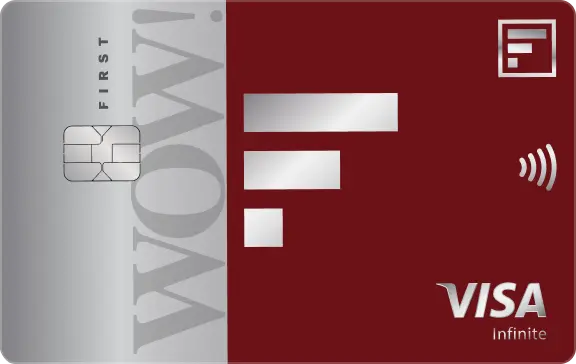
IDFC FIRST Wow Credit Card
annual fee
joining fee
reward rate
min income

Kotak 811 #DreamDifferent Credit Card
annual fee
joining fee
reward rate
min income
AU Bank Credit Card
annual fee
joining fee
reward rate
min income
| Card | Min CIBIL | FD required? | Joining fee | Best for |
|---|---|---|---|---|
| IDFC FIRST Wow! | None (no check) | ₹10,000 | ₹0 | Below 580 CIBIL |
| Kotak Aqua Gold | None (no check) | ₹15,000 | ₹0 first year | Below 580, highest limit utilization |
| SBI Card Advantage Plus | None (no check) | ₹15,000 | ₹0 | Below 580, PSU-bank trust |
| SBI Unnati | ~620 | No | ₹0 (lifetime free first 4 yrs) | 620-680 CIBIL, want unsecured |
| AU Bank LIT Credit Card | ~640 | No | ₹0 | 640+, custom-feature card |
| Federal Bank Imperio | ~650 | No | ₹0 | 650+, decent rewards |
Route 1: The FD-backed safety net (CIBIL doesn't matter)
The first three cards in the table — IDFC FIRST Wow!, Kotak Aqua Gold, SBI Card Advantage Plus — all share one critical feature: no CIBIL check at application. The bank's risk is zero (they hold a lien on your FD), so they don't underwrite based on your credit score.
For anyone with a CIBIL below 580 (or no CIBIL score yet, or who was just rejected for an unsecured card), this is the route. You park ₹10,000-50,000 in an FD, the bank issues a credit card with a limit of 80-100% of the FD value, you use it like a normal credit card, and after 12-18 months of clean payments your CIBIL has been rebuilt enough to qualify for unsecured cards.
Full details on the 8 FD-backed credit cards in India (terms compared, application steps) in our FD-backed credit card guide. For low-CIBIL applicants specifically, IDFC FIRST Wow! is the most efficient choice — lowest FD (₹10,000), 100% credit-limit utilization, zero fees ever.
SBI Card Unnati — the 620+ rebuild card
If your CIBIL is in the 620-680 range and you want to skip the FD step, SBI Card Unnati is the most accessible unsecured card. It's lifetime free for the first 4 years (no joining or annual fee), and it's explicitly underwritten for "credit-rebuilding" applicants — SBI's underwriting team accepts CIBIL scores from 620 upward.
Reward structure: 1% cashback equivalent on all spends (in the form of SBI reward points, redeemable at ₹0.25/point — so ₹100 spend = ₹0.25 cashback equivalent). Modest, but the value isn't in the rewards — it's in the unsecured-credit-card status, which CIBIL treats as "credit-mix" diversity (a factor in your score).
Eligibility: 620+ CIBIL, ₹25,000+/month income (from any source — salary, freelance, family transfer to your bank account). Application takes 7-10 days. Approval probability for 640+ CIBIL: ~75%. For 620-639: ~40%.
AU Bank LIT — the 640+ build-your-own card
AU Small Finance Bank's LIT (Live It Today) credit card is unique: you pay a small annual fee (₹199) to switch on specific reward features for the year (e.g., "5% cashback on dining" or "2% cashback on fuel"). You activate only the features you want.
For low-CIBIL applicants, the LIT card's appeal is that AU Bank's underwriting is more lenient than HDFC/ICICI/Axis — they accept CIBIL from 640+ with documented monthly income of ₹20,000+. As a small-finance-bank, AU has explicit appetite for the credit-rebuild market.
Annual fee: ₹199 (charged once at sign-up + once at renewal). Reward rates depend on the features you activate.
Federal Bank Imperio — the 650+ middle ground
Federal Bank's Imperio card is a no-frills entry-level card. ₹0 joining fee, ₹999 annual fee (waived if you spend ₹1.5 lakh/year). Reward rate: 1.5x reward points on online spends (effectively 1.5% reward equivalent), 1x elsewhere.
Federal Bank underwrites from 650+ CIBIL — slightly more lenient than HDFC/ICICI but stricter than SBI Unnati or AU LIT. The advantage of Imperio for the 650-700 CIBIL band: it's branded as a regular Federal Bank card (not a "credit-rebuild" card), so it doesn't carry the stigma some borrowers associate with rebuild-branded products.
The 12-month CIBIL rebuild plan
For someone with a CIBIL of 550 today who wants to be at 720+ in 12 months:
| Month | Action | Expected CIBIL |
|---|---|---|
| 0 | Pull free CIBIL report from cibil.com. Note all open credit accounts. | 550 |
| 0-1 | Open ₹10,000 FD at IDFC FIRST. Apply for IDFC Wow!. No CIBIL hit (no inquiry). | 550 |
| 1 | Receive Wow! card. Set up auto-pay from your savings. | 545 (the inquiry, if any, drops 5 pts) |
| 2-4 | Spend ₹3,000-4,000/month on subscriptions + utilities. Pay 100% on time. | 560-580 |
| 5-7 | Continue. Don't apply for any other credit. Don't carry balance. | 590-620 |
| 8-10 | Continue. Your CIBIL is now in "near-prime high" range. | 630-670 |
| 11-12 | Continue. Optionally request a credit-limit increase on Wow! (no new application = no inquiry). | 680-720 |
Don't deviate from the plan: zero missed payments, zero new applications, zero cash advances, keep utilization below 30%. The single biggest mistake low-CIBIL applicants make is being impatient — applying for a new card after 3 months "to see if approval is possible" triggers more hard inquiries that delay the rebuild.
What can tank your CIBIL during the rebuild
- Missing a credit card payment by even 1 day: -50 to -80 points. Recovery: 6-12 months of clean payments.
- Maxing out the card (using 90%+ of credit limit): -20 to -40 points until utilization comes back down.
- Applying for multiple cards or loans in a short window: -10 to -20 points per application.
- Taking a cash advance: doesn't directly drop CIBIL but eats into your utilization headroom + accrues 36% APR.
- Settling old debt for less than full amount: shows as "Settled" on CIBIL, which is worse than "Closed" — even though dispute is resolved. Try to pay 100% if at all possible.
Before you do anything: check your own CIBIL
You're entitled to one free CIBIL report per year from cibil.com. The report shows: your score, all open credit accounts, payment history for each, any disputes / collections / settlements. Free check options:
- cibil.com — official CIBIL site, one free report per year
- Paisabazaar / BankBazaar / CRED apps — free CIBIL check (they're CIBIL partners, no charge)
- Bank apps — HDFC, ICICI, Axis, SBI YONO all show your CIBIL score within their own apps if you're an existing customer
Look for:
- Errors — if a loan you don't recognize is on your report, dispute it via CIBIL's online dispute form. Disputes resolved in 30-45 days. Could lift your score by 50-100 points if there's a genuine error.
- Settled accounts — these tank your CIBIL. If possible, contact the lender and pay the remaining amount to convert "Settled" to "Closed" status.
- Old missed payments aging out — defaults older than 7 years should be off your report. If they're still showing, dispute via CIBIL.
Final take for low-CIBIL applicants in India
- If CIBIL is below 580: IDFC FIRST Wow! against ₹10K FD. Guaranteed approval, no inquiry hit.
- If CIBIL is 580-619: still take the IDFC Wow! route. Trying for unsecured cards risks more rejection-inquiries.
- If CIBIL is 620-649: try SBI Unnati (low approval risk + zero fees). If rejected, fall back to IDFC Wow!.
- If CIBIL is 650-689: try AU Bank LIT or Federal Imperio. Approval probability 70-85%.
- If you have CIBIL errors or fixable settled accounts: dispute / settle first, then apply. A 50-point upward correction makes most rejections become approvals.
Need to estimate where your CIBIL will be in 6 months? Use our credit-card payoff calculator to project payment schedules. For the full FD-backed CC comparison, see our FD-backed credit card guide.
Sources: RBI Master Direction — Credit Card and Debit Card – Issuance and Conduct Directions 2022 (updated November 2024); CIBIL Credit Information Bureau methodology document v3.2 (TransUnion CIBIL); SBI Card Unnati product disclosure; AU Small Finance Bank LIT credit-card terms; Federal Bank Imperio card disclosure.
Frequently Asked Questions
Can I get a credit card with a CIBIL score below 650?
Yes — through one of three routes: (1) FD-backed credit cards (no minimum CIBIL — works at any score including no-score), (2) bank-specific 'credit rebuild' cards like SBI Unnati or AU Bank LIT, accepted from CIBIL 600+, (3) co-applicant cards where a high-CIBIL family member guarantees your application. The first route is most reliable — IDFC FIRST Wow!, ICICI Coral-FD, Kotak Aqua Gold and SBI Advantage Plus all approve regardless of CIBIL score.
How long does it take to repair my CIBIL from 550 to 700?
Typically 12-18 months with disciplined repayment. The fastest path: take an FD-backed credit card immediately, use it for 30-40% of the limit monthly, pay 100% of the bill on due date every single month. After 6 months, CIBIL rises to 620-660. After 12 months: 680-720. After 18 months: 730+. The accelerators: (a) keep credit utilization below 30%, (b) zero missed payments, (c) don't apply for any other credit during the repair period.
Will applying for a new credit card hurt my already-low CIBIL?
Yes — every credit application triggers a 'hard inquiry' on your CIBIL report, which drops your score by 5-15 points temporarily. With a 550 CIBIL, you can't afford even a 10-point dip on a rejected application. Strategy: apply only for cards with very high approval probability (FD-backed cards have near-100% approval, no CIBIL check). Avoid multiple simultaneous applications — apply for one, wait for outcome, then try another only if needed.
What's the difference between a CIBIL score of 580 vs 640?
Practically: at 580 you're 'subprime' — banks see you as having had recent payment problems or limited credit history. Only FD-backed or co-applicant cards approve. At 640 you're 'near-prime' — banks may approve entry-level unsecured cards (SBI Unnati, AU Bank LIT, Federal Imperio) but with low limits (₹15,000-30,000) and higher APRs. The 60-point gap typically takes 6-9 months to close with one FD-backed CC + clean repayment.
Which cards are most likely to approve a CIBIL 500-650 applicant?
Guaranteed approval (no CIBIL check): IDFC FIRST Wow! against ₹10K FD, Kotak Aqua Gold against ₹15K FD, SBI Card Advantage Plus against ₹15K FD, ICICI Coral against ₹20K FD. Likely approval at 620+ CIBIL: SBI Unnati (1% cashback, ₹0 fees), AU Bank LIT (build your own rewards). Likely approval at 650+: Federal Bank Imperio, IDFC FIRST Classic. For below 580, only FD-backed routes work.
Should I close my old credit card with the bad payment history?
Usually no — closing an old card reduces your total available credit (raises your utilization ratio) AND shortens your credit history length (a CIBIL factor). If the old card had missed payments 2+ years ago, leave it open with zero balance. CIBIL ages out missed-payment marks: 24 months after the last default, the impact starts diminishing; after 84 months (7 years), it's fully removed. Closing the card doesn't speed this up — payment history stays on the report regardless.
EMI Calculator
Calculate your credit card EMI conversion
- Convert large purchases into easy EMIs
- Compare tenure options (3, 6, 9, 12 months)
- See total interest you'll pay upfront