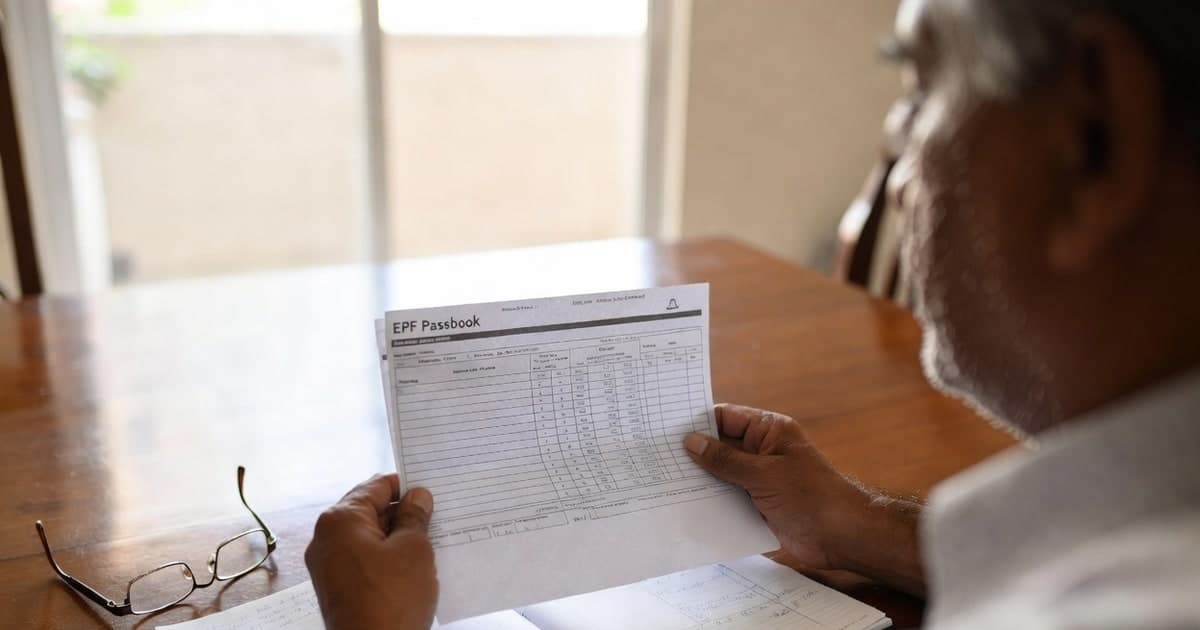
The EPF Scheme 2026, notified on 2 July 2026, formally writes the "higher pension" option into the scheme itself for the first time — until now, it existed only as a 2022 Supreme Court ruling that EPFO administered case by case, with no settled rulebook. If you're deciding whether to opt for a higher EPS pension, here's the actual formula, a worked comparison against the capped pension, and what else the new scheme changes.
The basic pension formula — unchanged
Whether you're on the standard capped pension or the higher option, the underlying formula is the same:
Monthly pension = (Pensionable salary × Pensionable service) ÷ 70
Pensionable salary is your average monthly salary over the last 60 months before retirement or exit from service. Pensionable service is your total years of EPS contribution (with a bonus of 2 years added if you've completed 20+ years of service). What changes between the standard and higher pension routes is entirely in how "pensionable salary" gets calculated.
What changes when you opt for the higher pension
Under the standard route, your EPS contribution — and therefore your pensionable salary — has historically been capped at a wage ceiling (₹15,000/month since 2014), regardless of your actual salary. Opt for the higher pension, and the calculation switches to your full actual salary, including allowances, averaged over the same 60-month window — not the capped figure. For anyone whose real salary has been well above ₹15,000/month for most of their career (the vast majority of salaried professionals today), this can multiply the eventual pension several times over.
Worked example
| Scenario | Avg. pensionable salary | Service | Monthly pension |
|---|---|---|---|
| Standard (capped) | ₹15,000 | 30 years | ₹6,429 |
| Higher pension (full salary) | ₹80,000 | 30 years | ₹34,286 |
The math: (15,000 × 30) ÷ 70 = ₹6,429 under the standard route, versus (80,000 × 30) ÷ 70 = ₹34,286 under the higher-pension route — more than five times higher, for the same years of service. The trade-off is the additional contribution required, covered next.
The additional contribution you have to pay
Choosing the higher pension isn't free. You (and in most cases your employer, retroactively) must contribute the difference between what was actually contributed at the capped ₹15,000 wage ceiling and what would have been contributed on your real salary throughout the qualifying period — plus interest at the rate your EPF account would have earned each year. For someone with a long service history and a real salary well above ₹15,000, this back-payment can run into several lakhs, due either as a lump sum or, per EPFO's revised process, adjusted from your existing PF corpus where permitted.
What else the EPF Scheme 2026 changes
- Higher pension is now a formal scheme provision, not a court-ordered exception EPFO handles ad hoc — reduces the inconsistent processing that plagued applications since the 2022 ruling.
- 20-day mandatory claim settlement timeline, with interest payable to the subscriber for unjustified delays beyond that window.
- Formal investment rules for how the EPF corpus itself is deployed are now written into the scheme document.
Should you opt for it?
The higher pension route makes the most sense if you have a long remaining runway to retirement, a real salary well above the old ₹15,000 cap, and the ability to fund the additional contribution without derailing other financial goals. It makes less sense close to retirement, since the additional back-contribution + interest bill is largest exactly when you have the least time left to recover it through a higher monthly pension. Run your own numbers with a full-salary vs. capped-salary comparison using the formula above before deciding — a financial advisor familiar with EPS specifically is worth the consultation fee given the sums involved. For the bigger retirement-planning picture beyond just EPS, see our PPF/NPS hub and the retirement calculator.
Frequently Asked Questions
Is the higher pension option still open for new applicants in 2026?
The EPF Scheme 2026 formalises the provision but doesn't reopen a fresh universal application window — eligibility still traces back to whether you were an EPS member during the periods the Supreme Court ruling and subsequent EPFO circulars covered. Check your specific eligibility on the EPFO portal rather than assuming.
Do I need to pay the additional contribution as a lump sum?
EPFO's process allows adjustment from your existing PF corpus in many cases rather than requiring fresh cash, though the exact mechanism depends on your specific case and when your application was processed.
Does the 60-month averaging window use my basic salary or full salary?
For the higher pension calculation, it's your full actual salary including allowances — this is the key difference from the standard capped-pension calculation, which historically used only basic + DA up to the ₹15,000 ceiling.
What happens if EPFO misses the new 20-day claim settlement window?
The EPF Scheme 2026 makes interest payable to the subscriber for delays beyond 20 days that aren't justified — a genuine accountability mechanism that didn't exist in the same form before.
Can I switch from the higher pension back to the standard one later?
The higher pension option is generally treated as a one-time, largely irreversible choice once processed — factor this into your decision rather than treating it as reversible.
Does opting for the higher pension affect my EPF (provident fund) lump-sum withdrawal separately?
EPS (pension) and EPF (provident fund) are accounted separately — opting for a higher EPS pension redirects more of your contribution history toward the pension calculation but doesn't itself change your EPF withdrawal rules.
Retirement Calculator
How much do you need?
- Factor in inflation-adjusted expenses
- Account for EPF, NPS, and PPF contributions
- See your retirement readiness score