
Every January for the past three years, I've sat down with a spreadsheet and done a brutal audit of my credit card wallet. What did each card earn me last year? What did each one cost in fees? Would I apply for it again today knowing what I know now? The list I'm about to share is the result of that Q2 2026 audit. It's deliberately boring. There's no HDFC Infinia. There's no Axis Magnus chase. There's no Amex Platinum status game. Just five cards that pay for themselves, fit my spend pattern, and don't make me feel like I'm working part-time as a credit-card optimiser.
I write about credit cards for a living, which means I get pitched to apply for every new launch, every premium tier upgrade, every co-branded variant. I deliberately don't. The reason is simple: most premium cards in India are a tax on people who don't run the numbers. I run the numbers. Here's what mine look like.
Why I'm sharing my actual wallet
NerdWallet and The Points Guy publish quarterly "what's in my wallet" posts because their readers want to see what the people writing the recommendations actually carry. It's the single most-read piece on those sites for a reason — credit-card advice gets trustworthy only when the author has skin in the game.
In India, almost no editor or writer publishes their actual wallet. The reason is straightforward: most Indian finance YouTubers and bloggers carry the cards they're paid the highest commission to push, not the cards they'd actually use. Their wallet posts would expose that gap. I'm choosing to expose mine.
Two ground rules for this post:
- Every card listed below is a card I genuinely carry in my Razorpay-branded wallet today. Not a card I tried for a month and dropped. Not a card my husband has. Mine.
- Every "Apply Now" CTA on this page is a Cuelinks affiliate link — we earn commission if you apply. This is disclosed at the top of every page on this site. But the cards I'm recommending here are the same cards I'd recommend in a private WhatsApp message to a friend, with zero commission attached. If they weren't, I wouldn't write this post.
My spend profile (why this matters)
Wallet recommendations only work if the recommender's spend profile matches yours. So here are mine, transparently:
- Annual credit card spend: ₹6-9 lakh (varies by quarter). I'm not a high-spender by Indian premium-card standards — Infinia / Diners Black / Magnus territory typically requires ₹15L+.
- Spend mix: ~40% utilities + bills (Google Pay via Axis ACE), ~25% Amazon shopping, ~15% groceries (Big Basket, Zepto), ~10% travel (1-2 domestic trips/year, 1 international every other year), ~10% restaurants + general.
- Travel: Light. 1-2 domestic flights/year. International maybe every 18 months. No business travel.
- Forex spend: ~₹50K-1L/year on USD subscriptions (Notion, GitHub, Figma) and occasional travel — small enough that a dedicated forex card doesn't earn its fee back.
- CIBIL score: 815. I've never paid interest on a credit card — I auto-pay 100% of every statement balance. This is non-negotiable for me; if you carry a balance, none of this card-stacking math matters, because 36-42% APR vaporises any rewards you earn.
If your spend looks similar to mine — middle-class salaried/founder Indian with ₹5-10L annual card spend — the cards below probably apply to you. If you spend ₹25L+ or genuinely travel internationally 4+ times a year, my wallet is wrong for you. Read a premium-card review instead.
Card #1 — HDFC Regalia Gold (my daily driver)
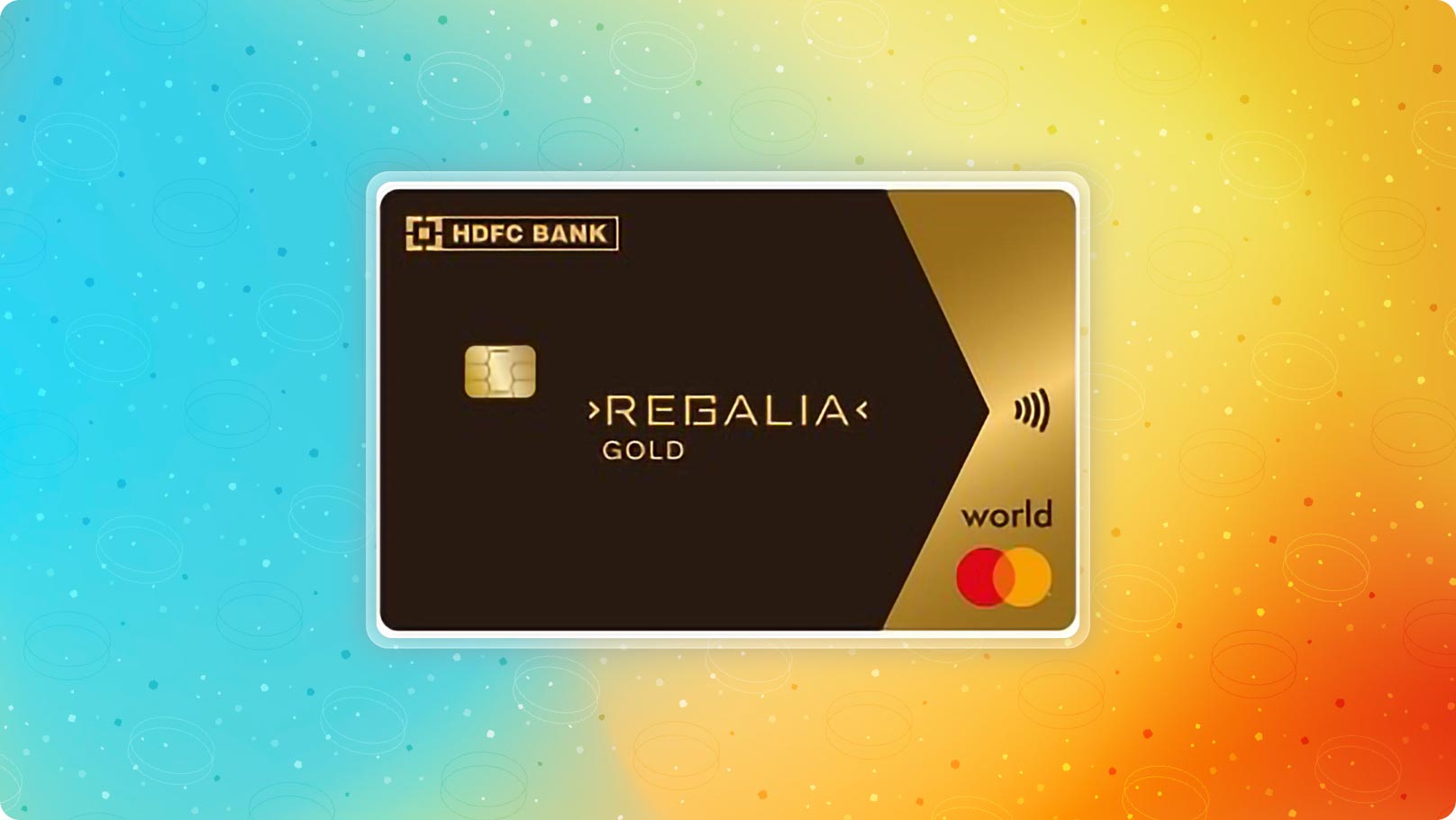
HDFC Regalia Gold Credit Card
annual fee
joining fee
reward rate
min income
Why I carry it: The Regalia Gold is the most boring, sensible premium card in India. ₹2,500 annual fee — waived if you spend ₹4 lakh per year, which I always hit. Reward rate is a flat ~3.3% effective via SmartBuy redemption on flights and hotels. The fee waiver mechanism is real and predictable, unlike the Infinia's new ₹18L mandate.
What I use it for: Everything that isn't covered by a better-rate card. Restaurants, general online shopping (non-Amazon), travel bookings via SmartBuy, miscellaneous spend. About 50% of my monthly card spend goes here.
The real economics: ₹3L through this card per year × 3.3% effective rate = ~₹9,900 in rewards. ₹2,500 fee waived. Net positive ~₹9,900/year. Plus 4 complimentary domestic lounge visits per year (worth about ₹3,000 in equivalent value if I travel domestically twice). Plus Marriott Silver complimentary status (free Wi-Fi + late check-out at Marriott properties — worth ~₹1,000 across 2-3 nights/year for me).
What I don't pretend it gives me: The headline 4 reward points per ₹150 only translates to 3.3% if you redeem via SmartBuy at the 1:1 ratio for travel. Catalogue redemption (cash, statement credit) drops to ~₹0.30 per point — meaning ~1.0% effective. The Regalia Gold's "4% reward rate" claim is real only if you actually book your flights/hotels through SmartBuy. I do. Most people don't.
Card #2 — Amazon Pay ICICI (the lifetime-free workhorse)
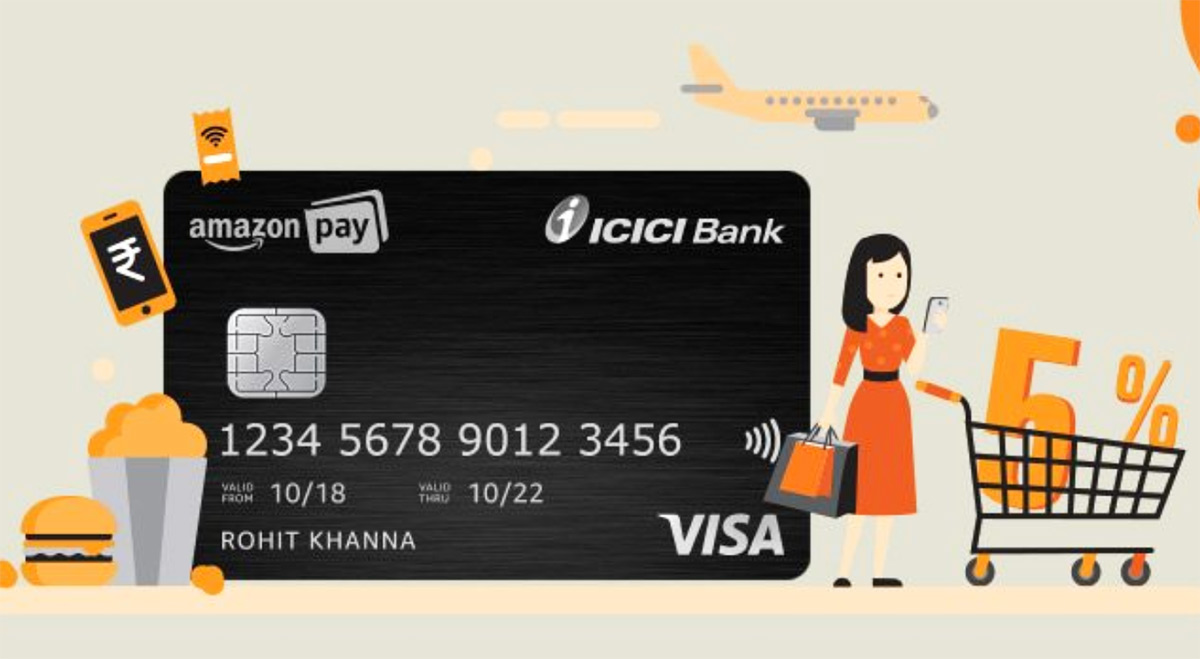
Amazon Pay ICICI Credit Card
annual fee
joining fee
reward rate
min income
Why I carry it: Lifetime free. No fee ever. 5% back as Amazon Pay balance for Prime members on Amazon.in (I'm Prime). 3% on non-Prime, 1% elsewhere. The Amazon Pay balance shows up in my Amazon wallet within 24 hours of statement generation — no redemption forms, no expiry games, no minimum-points thresholds.
What I use it for: Every Amazon purchase. Period. I've also routed all my Bharat Bill Payment Service (BBPS) bills through it when convenient — pays 1% baseline plus the Amazon Pay convenience.
The real economics: I spend roughly ₹15K-20K/month on Amazon (groceries via Amazon Fresh, household items, books, electronics replenishment). That's ₹2L-2.4L/year × 5% Prime rate = ₹10K-12K/year in Amazon Pay balance. Zero fee. This card is the single highest net-positive-value piece of plastic in my wallet.
What I don't pretend it gives me: The 5% only redeems on Amazon.in. If you don't actually shop Amazon regularly, the balance accumulates idle and the card stops being useful. For pure cash-back portability, a flat 1.5% card actually beats Amazon Pay ICICI at low-Amazon spend levels.
Card #3 — Axis Bank ACE (the utility bill specialist)
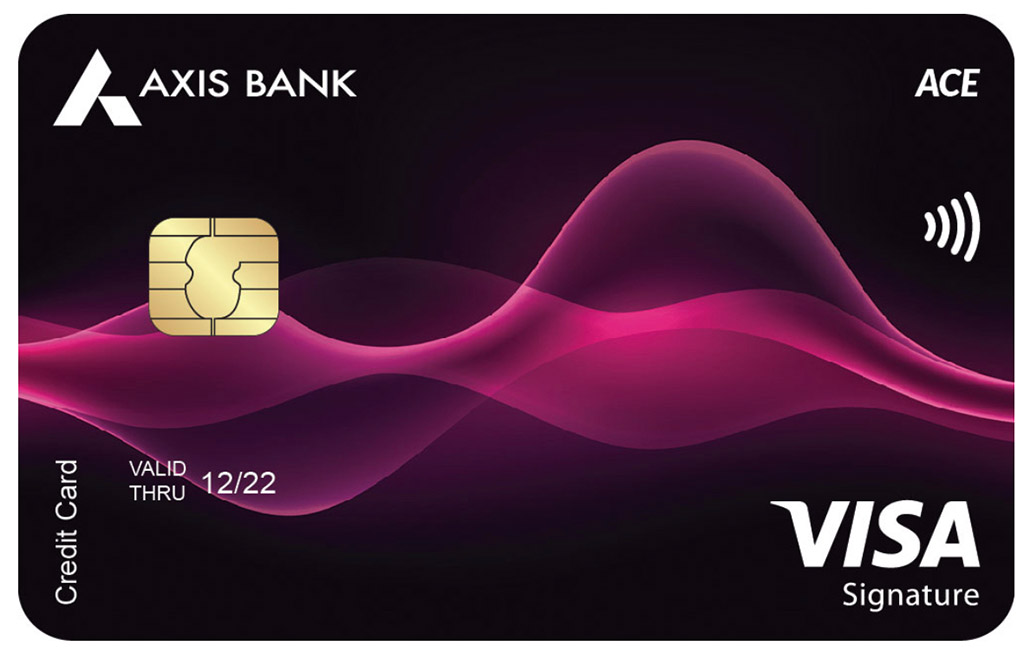
Axis Bank ACE Credit Card
annual fee
joining fee
reward rate
min income
Why I carry it: The Axis ACE pays 5% cashback when you pay utility bills through Google Pay routed through the card. Electricity, water, mobile, broadband, DTH, gas, FASTag recharges, even some BBPS bill categories — all qualify when routed via Google Pay. Annual fee ₹499.
What I use it for: Every utility bill that supports Google Pay UPI routing. Electricity bill (Tata Power), broadband (ACT), mobile recharges (Airtel postpaid for me + family), FASTag top-ups, occasional society maintenance via BBPS.
The real economics: ~₹3K/month in routable utilities + bills × 5% = ₹150/month = ₹1,800/year on the 5% category. Plus 4% on Swiggy/Zomato/Ola/Uber (routed via Google Pay) — I get maybe ₹2,000/year from these. Plus 1.5% on everything else routed via GPay (minimal for me). Total annual reward: ~₹4,000-5,000. Annual fee: ₹499. Net positive ~₹3,500-4,500.
What I don't pretend it gives me: The 5% rate is capped at ₹500 cashback per month on the utility category — meaning the rate plateaus above ₹10,000 monthly utility spend. For most middle-class Indian households this isn't a real cap; for joint families with 3+ utilities and 5+ mobile lines it might be. Read the cap structure before assuming the 5% scales.
Card #4 — IDFC FIRST Wow! (the backup + forex card)
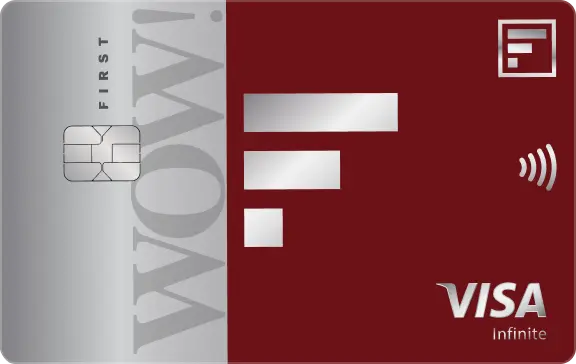
IDFC FIRST Wow Credit Card
annual fee
joining fee
reward rate
min income
Why I carry it: Lifetime free, FD-backed (₹10K FD I funded in 2023, gives me ₹10K credit limit — boring but useful). 1% on all spends, but the real reason I keep it is the FD-backed nature itself: it's my dedicated "if Regalia Gold gets fraud-blocked at 11pm on a Saturday, I can still buy groceries with the IDFC backup" card. Plus zero-forex markup on international transactions — useful for my USD subscriptions, even if my international spend is small.
What I use it for: Honestly? Mostly nothing day-to-day. I run a small transaction through it every quarter (a ₹500 grocery purchase) to keep the card "active" in IDFC's eyes — closed inactive cards drop off the CIBIL report eventually, taking your credit-history-length with them. It also serves as my emergency backup when my primary card is unreachable.
The real economics: Almost nothing positive (maybe ₹500/year in 1% cashback on the quarterly activation transactions). But zero negative — no fee, no annual charge, no surprise. The value is optionality: a working credit card in my wallet at zero ongoing cost.
What I don't pretend it gives me: The 1% reward rate is uncompetitive for active spending. The ₹10K credit limit (matching my FD) is also small. If I needed ₹50K of credit on this card I'd have to deposit ₹50K more in the linked FD. For people building CIBIL from zero, the IDFC FIRST Wow! is excellent — for me, it's a backup, not a daily driver.
Card #5 — HDFC MoneyBack+ (the CIBIL guardian)

HDFC MoneyBack+ Credit Card
annual fee
joining fee
reward rate
min income
Why I carry it: This was my first credit card in 2014. Ten-plus years of credit history sits on this account. Closing it would shave roughly 30-40% off my "average age of credit accounts" CIBIL sub-score, costing 20-40 points temporarily. I keep it open for that reason alone.
What I use it for: One transaction per quarter — typically a ₹200 mobile recharge — to keep the card active. That's it. I literally don't carry it in my physical wallet anymore; it lives in a drawer.
The real economics: ₹500 annual fee (waived in 2024 + 2025 because HDFC offered a one-time waiver for ten-year cardholders; will reassess in 2026 if the fee returns). Maybe ₹100/year in nominal cashback from the quarterly transactions. Net economics are roughly zero, but the CIBIL credit-history-length value is real.
What I don't pretend it gives me: Nothing. This card earns zero meaningful rewards and exists purely as a CIBIL artefact. If HDFC tries to charge me a real ₹500 fee in 2026 and doesn't offer a downgrade path, I'll downgrade rather than close — preserving the trade-line age.
Cards I've deliberately decided NOT to chase
This section is the most important part of the post, and the part you'll never see on a Wishfin or Paisabazaar wallet review (because they earn commission on these cards).
- HDFC Infinia / Diners Club Black: ₹12,500 + ₹10,000 fees respectively. Infinia's new ₹18L spend mandate for fee waiver means I'd pay the full ₹14,750 fee (with GST). My ₹6-9L spend isn't going to magically grow. Skip.
- Axis Magnus: Gutted by the August 2023 devaluation. Even post-rework, the partner-spike economics require chasing partner brands I don't naturally spend at. Skip.
- Amex Platinum: ₹60,000 fee. Only pays for itself if you use Fine Hotels + Resorts heavily (4+ international trips/year staying at FHR-eligible properties). I don't. Skip.
- Tata Neu Infinity HDFC: 5% NeuCoins on the Tata ecosystem is real, but only if you actually shop Croma + BigBasket + Tata CLiQ + Westside regularly. I shop Amazon. Skip.
- BPCL SBI Octane: 6.25% at BPCL pumps is real. I fill at HPCL because the pump near my building is HPCL. Wrong card for me. Skip.
- HDFC Swiggy: 10% on the Swiggy ecosystem is excellent. I don't order from Swiggy enough (cook at home most days). Skip.
The pattern: every premium card requires a matching spend pattern. Card economics is brutal — if your spend doesn't match the card's accelerator categories, you're paying the fee for benefits you don't use. Five generalist cards that fit my actual life beat eight specialist cards optimised for someone else's life.
My annual wallet-review process (you can copy this)
Every January I do this audit in a simple spreadsheet. You can do the same:
- Download every 2024 credit card statement from your bank apps. Calculate total spend per card.
- Multiply by effective reward rate — not the headline rate, the real effective rate after redemption-channel haircuts. (Our reward valuations table publishes paise-per-point for every Indian reward currency.)
- Subtract annual fee paid (after any waiver).
- That's your net annual value per card. If it's negative — and the card isn't earning its keep via non-monetary benefits like lounge access you actually use — downgrade or close.
- Check our devaluation tracker for any card you hold that announced changes during the year. Re-run the math with the new terms.
If you don't audit, the banks audit you — and they win. Every devaluation that's gone under-reported in 2024-2026 cost cardholders real money they could have rerouted by switching cards on time.
The unsexy truth
My wallet looks boring because I'm not playing the credit-card optimisation game. I'm using credit cards for what they actually are: a payment rail with a small rebate attached, predictable APR if I ever messed up and carried a balance (I don't), and a CIBIL builder I started in my twenties. The five cards above net me roughly ₹25,000-30,000 in annual rewards on ₹7-9L of spend, against zero total fees paid (everything's waived or LTF). That's a 3-4% blended return on my credit card spending, with zero hours/month spent juggling cards or chasing partner spikes.
If you can match that with a more elaborate setup, great. Most can't — and the time spent trying isn't free either. The right wallet for most middle-class Indian salaried + founder readers is two to four cards, chosen for your actual spend pattern, audited annually, and otherwise ignored. That's the wallet I carry. That's the wallet I'd recommend to a sister, a friend, or anyone who reads this site.
Questions, disagreements, your own wallet to share? Email me at shivpriya@investingpro.in. I read every reply.
Sources: my own 2024 + 2025 credit-card statements; Cuelinks affiliate dashboard for commission disclosure; HDFC Bank Regalia Gold MITC (May 2026); ICICI Bank Amazon Pay product page; Axis Bank ACE product page; IDFC FIRST Wow product page; HDFC MoneyBack+ MITC. Effective reward rates cross-checked against InvestingPro's reward-valuations methodology page.
Frequently Asked Questions
What credit cards do you actually carry, Shivpriya?
Five active cards in Q2 2026: HDFC Regalia Gold (primary daily driver, ₹2,500 fee), Amazon Pay ICICI (lifetime free, 5% Prime cashback on Amazon), Axis Bank ACE (₹499 fee, 5% on Google Pay utility bills), IDFC FIRST Wow! (lifetime free, kept for zero-forex international backup), and HDFC MoneyBack+ (₹500 fee, my oldest card — kept open purely for CIBIL credit-history-length protection). That's it. No HDFC Infinia. No Axis Magnus. No Amex Platinum.
Why don't you have a premium card like HDFC Infinia or Amex Platinum?
Because the math doesn't work for my spend profile. HDFC Infinia (₹12,500 fee + GST) needs ₹18 lakh annual spend post the 2026 changes to waive the fee. I spend ₹6-9 lakh/year on credit cards — nowhere close. Amex Platinum (₹60,000 fee) only pays for itself if you use Fine Hotels + Resorts heavily, which I don't. Premium cards are a tax on people who don't run the actual numbers. I run the numbers for a living — and the boring ₹2,500-fee Regalia Gold returns more net value than Infinia would, at my spend level.
Which credit card combo would you recommend for someone starting out in India?
Two cards is enough for 90% of Indian users: one lifetime-free cashback card (Amazon Pay ICICI if you shop Amazon, or Axis ACE if you don't) for daily spend, plus one no-fee FD-backed card (IDFC FIRST Wow!) to build CIBIL score with zero risk. Add a third card only when annual spend crosses ₹5 lakh and a fee-based card's reward rate genuinely beats your cashback card's flat rate. Don't chase the YouTuber 5-card 'optimised setup' until you're consistently spending ₹10L+ — the optimisation noise isn't worth the wallet juggle.
What credit cards have you cancelled or downgraded?
Two cancellations that mattered: (1) HDFC Diners Club Privilege in 2024 — never used the dining benefits enough to justify the fee. Downgraded to HDFC MoneyBack+ instead of closing, to preserve credit history. (2) SBI SimplyCLICK in 2023 — the partner-merchant restrictions made the 10X reward category essentially unusable for me. Just closed it; CIBIL dropped 12 points for 3 months, then recovered. Lesson: downgrade rather than close whenever the bank offers a product-change path. CIBIL stays clean.
Do you earn affiliate commission from these card recommendations?
Yes, when an InvestingPro reader applies via the Apply Now button on this site, we earn an affiliate commission from Cuelinks (the affiliate network we use for credit card partnerships). This article is no exception — the cards I personally carry are the same cards we earn commission on. But here's our editorial standard: we never recommend a card we don't personally carry or wouldn't recommend to a family member. The Amazon Pay ICICI, Axis ACE, and IDFC FIRST Wow! recommendations would be identical whether or not we earned a cent. The HDFC Regalia Gold is the same card I'd use even if I worked in any industry other than finance media.
How often do you change your credit card wallet?
Once a year, maximum. Indian credit-card terms change frequently (the HDFC Infinia 2026 spend mandate, the Axis Magnus 2023 cut, the Tata Neu 2024 earn halving — all happened with minimal warning). I review my five cards every January and after any major devaluation. If a card I hold devalues, I run the new math: keep, downgrade, or cancel. The wallet I've described above is the result of that review for Q2 2026 — it'll likely change marginally by Q4 2026 when card refresh cycles complete.