India has over 15 million freelancers and self-employed professionals, and the single biggest friction point in their financial life is the credit-card application form's "ITR Acknowledgement Number" field. The good news: RBI's 2022 Master Direction explicitly allows banks to accept alternative income proofs for self-employed credit-card applicants, and the major Indian banks have built dedicated underwriting paths for ITR-less applications. Here are the six routes that actually work in 2026, ranked by approval probability.
Why banks ask for ITR (and when it's negotiable)
Indian banks ask for ITR for two reasons: (1) it's third-party-verified income proof from the tax department, so the bank's compliance team treats it as the gold standard, (2) it gives the bank a multi-year income trend, not just a snapshot. When you don't have ITR, you're asking the bank to substitute alternative proofs that approximate these two functions.
For credit cards specifically (vs personal loans or home loans), banks have much more flexibility because the credit-card balance is unsecured but small. The bank's worst-case exposure on a ₹1 lakh credit limit is ₹1 lakh — they can absorb that risk with alternative income proofs. For a ₹50 lakh home loan, they can't.
Route 1: 6-month bank statements (highest success rate)
This is the path 70% of approved self-employed-without-ITR applications take. The bank reads your last 6 months of savings or current-account statements and computes your average monthly credit-side total. If it exceeds the card's income threshold, you're approved.
What the bank looks for:
- Average monthly inflow ≥ ₹25,000 (for entry cards) or ≥ ₹50,000-1L (for mid-tier) or ≥ ₹2L (premium). The bank computes this as: (sum of credit transactions in last 6 months) ÷ 6.
- Stable pattern — banks prefer regular inflows over a few large lump sums. If you got one ₹2 lakh payment in a 6-month period and nothing else, the bank treats your monthly average as ₹33,000 but flags it for review.
- No frequent overdrafts or returned cheques — these signal cash-flow stress and tank your application.
- Identifiable business inflows — UPI tagged with invoice numbers, IMPS with sender labels, or salary-like recurring inflows from clients. Generic "UPI to UPI" inflows count less than identifiable business payments.
How to strengthen this route: maintain a separate bank account for client payments only. Keep personal expenses on a different account. This makes your business-account statement read like a salaried person's account — predictable inflows, clean record.
Route 2: GST registration + returns (best for service businesses)
If your freelance income exceeds ₹20 lakh/year (₹10 lakh for North-Eastern states), GST registration is anyway mandatory. If you're below the threshold but voluntarily register, you get a powerful credit-card eligibility lever.
Banks treat 12 months of consistent GST returns as proof of:
- Business existence — GST registration requires PAN, Aadhaar, business address proof, bank account verification, all cross-checked with the tax department
- Revenue scale — your GSTR-1 (sales return) shows your monthly invoice values
- Compliance history — late filings show up, and banks penalize them
HDFC and ICICI both have explicit "self-employed with GST" underwriting tracks. For these banks, 12 months of clean GST returns can substitute for ITR. The application gets routed to a different underwriting team with higher approval ratios for self-employed applicants.
Route 3: Form 26AS (when clients have deducted TDS)
If you're a freelancer working with corporate clients, they're likely deducting TDS on your payments under Section 194J (professional fees) or Section 194C (contractor payments). This TDS shows up in your Form 26AS — a tax-department document showing all tax credits associated with your PAN.
Form 26AS is a strong income proxy because it's third-party-verified by the tax department. A 12-month Form 26AS showing ₹50,000+ in monthly TDS-tagged inflows can substitute for ITR in many bank's self-employed underwriting tracks.
How to download Form 26AS: log into the Income Tax e-filing portal (incometax.gov.in) → My Account → View Form 26AS → select the assessment year → download as PDF. Include this in your credit-card application along with a covering letter from yourself stating "I have not yet filed ITR for AY [year], but Form 26AS reflects my professional income via TDS deductions by my clients."
Route 4: Current-account statements (for registered businesses)
If you've registered your freelance work as a sole proprietorship, OPC (One Person Company), or LLP, you'll have a current account in your business's name. Banks treat current-account statements differently from savings-account statements — they're explicitly designed for business cash flow, so the income-proof calculation is more lenient.
For sole proprietors, opening a current account costs ₹0-5,000 in setup, requires GST registration (or shop & establishment certificate / Udyam registration), and unlocks both better credit-card approval ratios AND access to business credit cards (HDFC Biz Black, ICICI Business Advantage, Axis MyBiz) which have higher credit limits and better rewards on business expenses.
Route 5: FD-backed credit card (zero income proof)
If you don't want to navigate the alternative-income-proof maze, an FD-backed credit card bypasses the income-proof requirement entirely. You deposit ₹10,000-50,000 as a fixed deposit, the bank marks it as lien, you get a credit card with a limit of 80-100% of the FD value.
Full details on FD-backed credit cards (8 Indian banks, terms compared) in our dedicated guide. For self-employed applicants, this is the safety net — even if other routes fail, this one is guaranteed to work because there's no income check at all.
Route 6: Co-applicant with salaried family member
If your spouse, parent, or sibling has a salary slip, you can apply as primary with them as guarantor on certain credit cards. This is rare in India (most banks just push you toward add-on cards instead), but Standard Chartered, HSBC, and some private banks accept guarantor-backed applications.
The downside: your guarantor is jointly liable for your dues. If you default, the bank pursues them. This is the route I'd recommend least — better to take an FD-backed card and build CIBIL independently than to encumber a family member's credit.
Best credit cards for self-employed without ITR (2026)
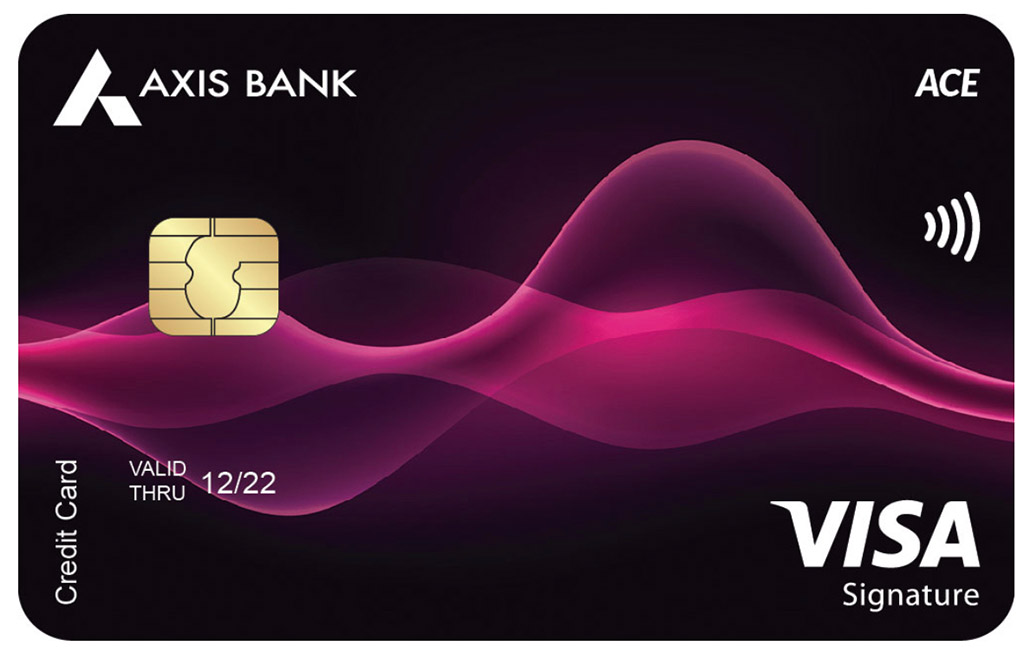
Axis Bank ACE Credit Card
annual fee
joining fee
reward rate
min income
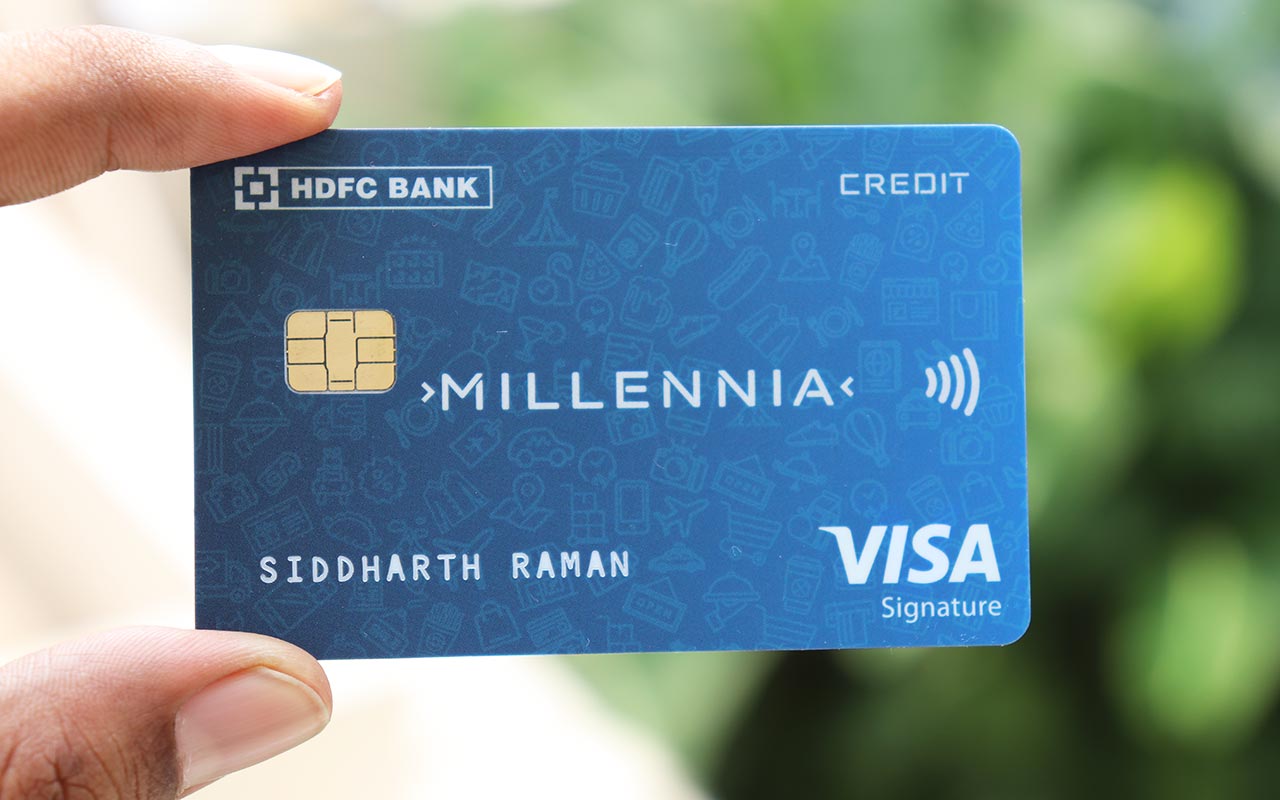
HDFC Millennia Credit Card
annual fee
joining fee
reward rate
min income
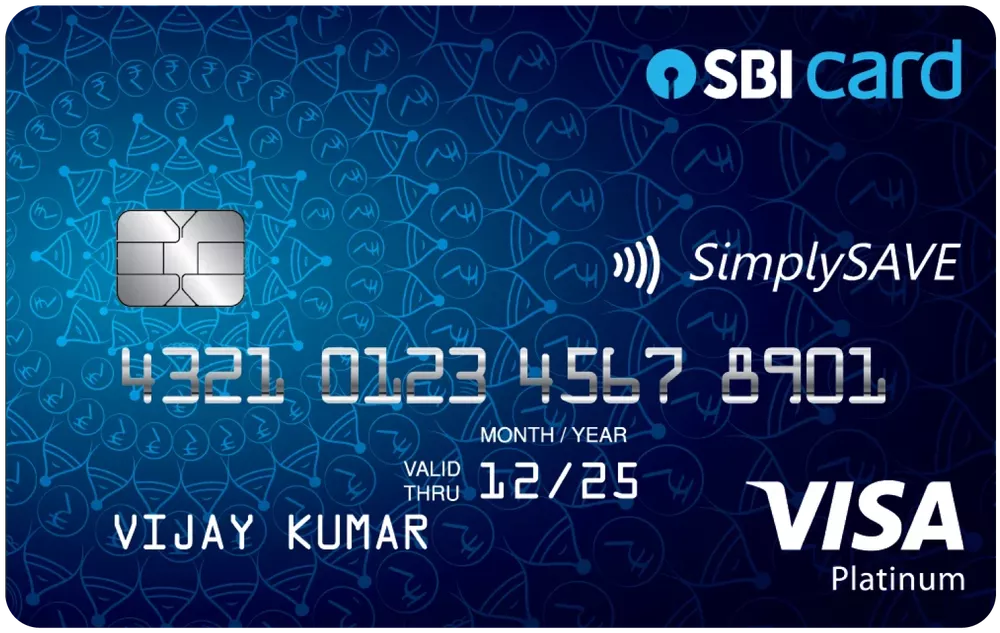
SBI SimplySAVE Credit Card
annual fee
joining fee
reward rate
min income
| Card | Income threshold | Joining fee | Annual fee | Best for |
|---|---|---|---|---|
| SBI SimplySAVE | ₹25,000/mo (bank statement) | ₹499 | ₹499 (waived ₹1L spend) | First-card freelancer |
| Axis ACE | ₹30,000/mo (bank statement) | ₹499 | ₹499 (waived ₹2L spend) | Rewards-heavy freelancer (5% on Gpay bill pay) |
| HDFC MoneyBack+ | ₹25,000/mo (bank statement) | ₹500 | ₹500 (waived ₹50K spend) | HDFC existing account holder |
| ICICI Platinum Chip | ₹35,000/mo (bank statement) | ₹199 | ₹0 lifetime | Cheapest lifetime free card |
| HDFC Regalia | ₹75,000/mo + HDFC savings | ₹2,500 | ₹2,500 (waived ₹3L) | Premium feel without ITR |
| IDFC FIRST Wow! | No income check (FD-backed) | ₹0 | ₹0 lifetime | Zero-friction freelancer |
Self-employed credit-card action plan
- If you have GST + 12 months of returns: apply directly for HDFC Regalia or Axis Magnus. GST-track underwriting gives you the best card without ITR.
- If you have bank statements showing ₹50,000+/mo average inflow: apply for Axis ACE or HDFC MoneyBack+. 80% approval probability.
- If you have ₹25,000-50,000/mo inflow: SBI SimplySAVE or ICICI Platinum Chip. Both have lower thresholds and are forgiving of patchy self-employed cash flow.
- If everything else fails: IDFC FIRST Wow! against a ₹10,000 FD. Guaranteed approval, zero fees, builds CIBIL fully.
- While you wait: file a nil ITR for the current AY. Cost: ₹0-1,500. After 1 ITR is on record, every future credit-card application becomes 2x easier.
The 18-month freelancer credit playbook
If you're starting your freelance journey today and want to be at a premium-credit-card eligibility in 18 months:
- Month 1: Open a separate business savings account. Route all client payments there.
- Month 1-2: File last year's nil ITR (or actual ITR with whatever income you had).
- Month 2: Open a ₹15,000 FD at IDFC FIRST Bank. Apply for IDFC Wow! credit card. Use it for ₹4,000-5,000/month of routine spend (subscriptions, fuel, groceries).
- Month 3-12: Pay the IDFC Wow! bill in full on time every month. Your CIBIL score will rise from no-score to 720-750 over 12 months.
- Month 12: File current year's ITR (even nil). You now have 2 ITRs on record + 12 months of clean credit history.
- Month 13: Apply for SBI SimplySAVE or Axis ACE. Approval probability ≥ 85%.
- Month 13-24: Maintain clean payment history on both cards. Total credit limit grows.
- Month 24: Apply for premium cards — HDFC Regalia, ICICI Coral Premium, Axis Magnus. With 2+ years of ITR + 750+ CIBIL + multiple clean credit accounts, you'll qualify.
This is the freelancer credit-building playbook used by India's professional consulting community. Tradition says you need to be salaried to have a "real" credit card — that's no longer true in 2026.
Need to compare specific cards? See our full credit-card listing or read our how-to-choose-a-credit-card guide. For income-tax filing help, our ITR filing hub walks you through the regime choice and form selection for AY 2026-27.
Sources: RBI Master Direction — Credit Card and Debit Card – Issuance and Conduct Directions 2022 (last updated November 2024); Income Tax Department e-filing portal (incometax.gov.in); GST Network (gst.gov.in) registration guidelines; HDFC Bank credit-card eligibility documentation; SBI Card application disclosure 2024-25.
Frequently Asked Questions
Can I get a credit card without ITR in India?
Yes. Indian banks accept five income-proof alternatives in lieu of ITR: 6 months of bank statements showing ₹25,000+ monthly inflows, GST registration with 12 months of returns, Form 26AS with TDS deductions, current-account statements for a registered business, or an FD-backed credit card with no income proof at all. HDFC, ICICI, Axis, and SBI all have dedicated 'self-employed without ITR' application paths.
What's the minimum income to get a credit card as a freelancer?
₹25,000/month average inflow into your savings account is the typical threshold for entry-level credit cards (HDFC MoneyBack+, SBI SimplySAVE, Axis ACE, ICICI Platinum Chip). For premium cards (HDFC Regalia, Axis Magnus, SBI Prime), banks want ₹75,000-1,00,000/month average inflow. The bank computes 'income' as the average credit-side total of your last 6 months of bank statements.
Do GST registrations help freelancers get credit cards faster?
Yes, materially. GST registration combined with 6-12 months of consistent GST returns acts as proof of business existence + revenue. Banks treat GST-registered freelancers as 'self-employed with business' rather than 'individual freelancer', which improves the credit card approval odds and unlocks higher credit limits. HDFC and ICICI both have explicit GST-registered-self-employed underwriting tracks with higher approval ratios.
Will my UPI inflows count as income proof for credit cards?
Partly. Banks read the credit side of your bank statement holistically — UPI inflows from clients (e.g., PhonePe, Google Pay payments tagged as 'invoice payment' or 'professional fees') do count toward your monthly average inflow. But ad-hoc UPI from friends/family does not. To strengthen UPI-based income proof, ask clients to mention 'invoice [number]' or 'professional fees' in the UPI remark — this makes the inflow clearly identifiable as business income.
Should I file an ITR even if my income is below the taxable threshold?
Yes — even nil ITR (Income Tax Return showing zero tax payable) dramatically improves your credit card approval chances. A 1-year-old nil ITR is treated by banks as 'income proof confirmed by the government', which is stronger than even 12 months of bank statements. Cost to file nil ITR: ₹0 if you do it yourself on the IT department's e-filing portal, or ₹500-1,500 via a CA. This is the single highest-ROI action a freelancer can take for credit-card eligibility.
Which is the best credit card for freelancers in India without ITR?
For first card: SBI SimplySAVE (₹25,000 monthly inflow accepted, ₹0 first-year fee). For rewards: Axis ACE (5% cashback on Google Pay bill payments, ₹499 fee but waived on ₹2L annual spend). For premium feel without ITR: HDFC Regalia (₹50,000 monthly inflow OR ₹1L+ in HDFC savings balance accepted in lieu of ITR). For guaranteed approval: IDFC FIRST Wow! against a ₹10,000 FD — bypasses the income-proof requirement entirely.
EMI Calculator
Calculate your credit card EMI conversion
- Convert large purchases into easy EMIs
- Compare tenure options (3, 6, 9, 12 months)
- See total interest you'll pay upfront