
Indian banks formally require income proof for credit cards because of RBI's KYC + underwriting guidelines for unsecured credit. But the same RBI guidelines explicitly carve out four exception paths — FD-backed cards, prepaid cards, add-on cards, and co-applicant cards — where income verification is either replaced by collateral or guaranteed by a third party. All four are legitimate, well-documented routes used by millions of Indians who don't have a salary slip or ITR. Here's exactly how each works in 2026.
The 4 income-proof-bypass routes — at a glance
| Route | What substitutes for income | Real credit card? | Builds CIBIL? | Setup time |
|---|---|---|---|---|
| 1. FD-backed credit card | Fixed deposit (collateral) | Yes | Yes (full) | 5-10 days |
| 2. Prepaid Visa card | Pre-loaded balance | No (debit-like) | No | Same day |
| 3. Add-on card | Family member's income | Yes | Partly | 7-10 days |
| 4. Co-applicant card | Guarantor's income | Yes | Yes (full) | 14-21 days |
Route 1: FD-backed credit cards — the most useful path
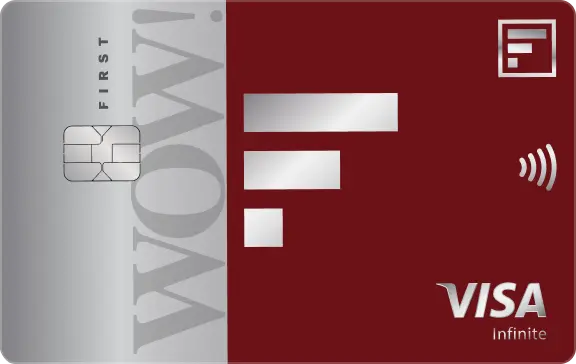
IDFC FIRST Wow Credit Card
annual fee
joining fee
reward rate
min income
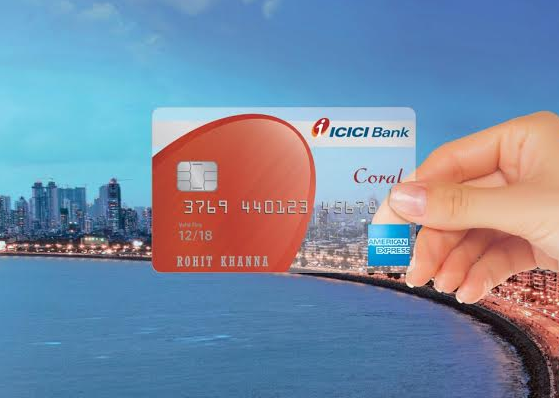
ICICI Coral Credit Card
annual fee
joining fee
reward rate
min income
Eight Indian banks issue credit cards backed by a fixed deposit lien. Your money stays in an FD (still earning normal FD interest), the bank issues a credit card with a limit of 80-100% of the FD value, and there's zero income check because the FD itself is collateral.
Top 4 FD-backed cards for income-less applicants in 2026:
| Card | Min FD | Credit limit | Joining fee | Annual fee |
|---|---|---|---|---|
| IDFC FIRST Wow! | ₹10,000 | 100% of FD | ₹0 | ₹0 lifetime |
| Kotak Aqua Gold | ₹15,000 | 90% of FD | ₹0 first year | ₹500 (waived ₹50K spend) |
| SBI Card Advantage Plus | ₹15,000 | 85% of FD | ₹0 | ₹500 |
| ICICI Coral (against FD) | ₹20,000 | 85% of FD | ₹500 + GST | ₹500 + GST |
For Indians without income proof who want a real credit card that builds CIBIL fully, this is the path. Full deep-dive on all 8 FD-backed credit cards in our FD-backed credit card guide.
The standard playbook: open a ₹10,000-50,000 FD (depending on which bank), apply for the FD-backed card, get approved in 5-10 days, use the card for 12-18 months with 100% on-time payments. Your CIBIL builds from no-score to 750+. After 18 months, apply for an unsecured card (banks will accept you on CIBIL strength alone, no income proof needed); the FD-backed card can then be closed and the FD lien released.
Route 2: Prepaid Visa cards — same-day, zero questions
Federal Scapia and Niyo Global are both prepaid Visa cards (issued via Federal Bank and Yes Bank/SBM Bank respectively). You load money via UPI, IMPS, or netbanking, then spend it like a debit card — at any Visa merchant globally, including online subscriptions, international shopping, and travel.
| Card | Issuer | Forex markup | Joining fee | Best for |
|---|---|---|---|---|
| Federal Scapia | Federal Bank | 0% | ₹0 | International subscriptions (ChatGPT Plus, Spotify, Amazon US) |
| Niyo Global | Yes Bank / SBM Bank | 0% POS, 1% ATM | ₹0 | International travel (no forex markup on swipes) |
What they're NOT: real credit cards. They don't extend credit (you can only spend what you've loaded), they don't build CIBIL, they don't appear on credit reports. KYC is PAN + Aadhaar OTP — no income check, no FD lock, no underwriting at all.
Use them for: international transactions where you'd otherwise pay 3.5-4% forex markup on a regular Indian credit card. For domestic credit-building, you still need one of the other three routes.
Route 3: Add-on cards under a family member's primary
Any major Indian bank credit card-holder can add a family member (spouse, parent, child, sibling) as a supplementary card-holder. The add-on:
- Has no separate income verification — the primary holder's income covers both cards
- Is free (₹0 joining + ₹0 annual fee, even when the primary card has fees)
- Shares the primary's credit limit (₹2 lakh limit = both cards draw from the same pool)
- Reports partially on the add-on holder's CIBIL (spends + payments register, but credit-history-length is inherited from primary)
This is the most common route for spouses of salaried earners, children of high-income parents, or anyone who has a close family member with a credit card. Setup time: 7-10 days for the supplementary card to arrive.
The limitation: when you eventually try to apply for a primary card in your own name, banks see your credit history is tied to someone else's income. They may decline, citing "primary income not verified". For full independent credit history, an FD-backed card is better.
Route 4: Co-applicant cards — rare in India, but real
HDFC Bank (for Infinia Metal Edition), Standard Chartered (Ultimate Card), and HSBC (Premier Mastercard) all accept co-applicant arrangements where both holders share full liability. Both build CIBIL independently. The co-applicant's income is the qualifying factor.
This route makes sense only for premium cards (₹2,500+ annual fees, ₹50 lakh+ household income required). For most income-less applicants, the FD-backed route is cleaner and cheaper.
The income-less applicant's action plan
- Want a real credit card that builds CIBIL? IDFC FIRST Wow! against ₹10,000 FD. Setup: 24-48 hours via mobile app.
- Want maximum credit-limit utilization for your FD outlay? Kotak Aqua Gold (90% of FD value).
- Want a card today, no FD? Federal Scapia prepaid (loaded via UPI) — works at every merchant + zero forex. NOT a credit card; doesn't build CIBIL.
- Family member has a credit card already? Get an add-on for free, in your name, in 7-10 days. Use as a temporary measure while you set up the FD-backed CIBIL builder.
- Building toward a premium card with high-income spouse/parent? Apply as co-applicant on HDFC Infinia Metal or Standard Chartered Ultimate.
What to avoid (these are NOT legitimate income-proof-bypass routes)
- "Get a credit card on Aadhaar only" Instagram / WhatsApp ads: phishing. No legitimate Indian bank issues a credit card on Aadhaar alone.
- "Slice / Uni / Lazypay / Simpl" BNPL products marketed as credit cards: regulatory scrutiny since RBI's November 2022 PPI ruling. Many are functionally not credit cards. Stick to traditional banks.
- "₹50,000 limit guaranteed in 5 minutes" NBFC kiosks at malls: typically co-branded with shadow lenders, high APRs, hidden fees, and the "guaranteed" promise rarely materializes.
- "Pay ₹1,000 advance fee for credit card processing": scam. Legitimate banks never charge upfront fees for applications.
- "Personal loan first, credit card after" packages: never take an unsecured loan as a credit-card precondition. The loan APR (14-22%) destroys any benefit from the card.
The path forward without income proof
The standard 18-month playbook for an Indian without income proof who wants to be at premium-card eligibility:
- Today: Open ₹10,000 FD at IDFC FIRST. Apply for IDFC Wow! credit card via mobile app.
- Week 1-2: Card arrives. Set up auto-pay. Start small spends (₹2,000-3,000/month).
- Months 1-12: Pay 100% on time every month. Don't max out the card. Don't take cash advances.
- Month 6: Check your CIBIL — should be 700-720. If not, audit your usage (probably high utilization or a missed payment).
- Month 12: CIBIL should be 750+. Apply for an unsecured card (SBI SimplySAVE or Axis ACE). Even without income proof, 12 months of clean credit-card payment history convinces banks to approve.
- Month 18: You now have two cards, total credit limit ~₹50,000-80,000. Close the FD-backed card if you want (release the ₹10,000 FD), or keep it as a backup.
- Month 24: Apply for HDFC Regalia or ICICI Coral Premium. With 24 months of clean credit history, CIBIL 770+, and an existing unsecured card, banks will accept you even without traditional income proof.
The first FD-backed card is the linchpin. Get that right, and the rest of the credit-building journey is largely automatic. Need to compare more cards? See our full credit-card listing. For income-less applicants who are also new to India's tax system, our ITR filing hub walks you through filing a nil ITR — which dramatically strengthens future credit-card applications.
Sources: RBI Master Direction — Credit Card and Debit Card – Issuance and Conduct Directions 2022 (last updated November 2024); IDFC FIRST Bank Wow! credit card product disclosure; Kotak Mahindra Bank Aqua Gold credit card terms; CIBIL Credit Information Bureau (TransUnion CIBIL) methodology document v3.2.
Frequently Asked Questions
Can I get a credit card in India without any income proof?
Yes, through four routes that bypass income verification entirely: (1) FD-backed credit cards — the FD substitutes for income check, (2) Prepaid Visa cards like Federal Scapia or Niyo Global — load and spend, no income check, (3) Add-on cards under a family member's primary card — no separate income verification, (4) Co-applicant cards where a high-income relative guarantees your application — accepted at HDFC, Standard Chartered, HSBC for premium cards. All four are legitimate products from major Indian banks, not NBFC shadow products.
Is a credit card without income proof considered a 'real' credit card?
Yes for routes 1 (FD-backed), 3 (add-on), and 4 (co-applicant) — they're all true credit cards with the same Visa/Mastercard network, same reward programs, same CIBIL reporting as any unsecured card. Route 2 (prepaid Visa cards like Scapia or Niyo) are NOT credit cards — they're prepaid debit instruments. They give you the same payment functionality (works at all merchants, online and offline) but don't build CIBIL and don't extend credit. Be clear which type you're getting.
Do banks really not check anything when issuing an FD-backed credit card?
Banks still do basic KYC (PAN, Aadhaar, address proof) and check for any active default on a CIBIL report (a 'fresh default' would block approval). But they don't check your CIBIL score, don't require salary slips, don't ask for ITR, don't ask for bank statements. The FD serves as 100% collateral — the bank's risk is zero, so income-verification is irrelevant to their approval algorithm.
How much money do I need to lock up for an FD-backed credit card?
₹10,000 minimum at IDFC FIRST Bank (Wow!), ₹15,000 at Kotak Mahindra (Aqua Gold) or SBI (Advantage Plus), ₹20,000 at ICICI Bank (Coral against FD) or Axis Bank (Insta Easy). The credit limit is 80-100% of the FD value. Your FD continues earning the standard FD interest rate (6.5-7.5% at most major Indian banks in 2026) — it's just marked as collateral, not broken. After 12-18 months of clean credit-card payments, you can usually transition to an unsecured card and release the FD lien.
Why do Indian banks ask for income proof at all if FD-backed cards work?
Income proof is the underwriting standard for unsecured credit cards (where the bank takes on full repayment risk). For unsecured cards, the bank's worst-case loss is the full credit limit — so they need confidence in your ability to repay. FD-backed cards transfer that risk to the FD itself, making income-proof verification redundant. Banks promote unsecured cards more loudly because they're more profitable (higher fees + interchange) — but FD-backed cards are equally legitimate banking products, just under-marketed.
Which is the single best credit card option without income proof?
IDFC FIRST Bank Wow! against a ₹10,000 FD. It's the only credit card in India with: (a) no income check, (b) zero joining fee, (c) zero annual fee for life, (d) 100% credit-limit utilization of the FD value, (e) FD continues earning IDFC's ~7-7.5% interest. Application is fully online via the IDFC FIRST mobile app, approval in 24-48 hours, no branch visit. For Indian applicants without income proof who want a real credit card that builds CIBIL — this is the cleanest 2026 option.
EMI Calculator
Calculate your credit card EMI conversion
- Convert large purchases into easy EMIs
- Compare tenure options (3, 6, 9, 12 months)
- See total interest you'll pay upfront